
How Green Steel Is Reshaping Demand
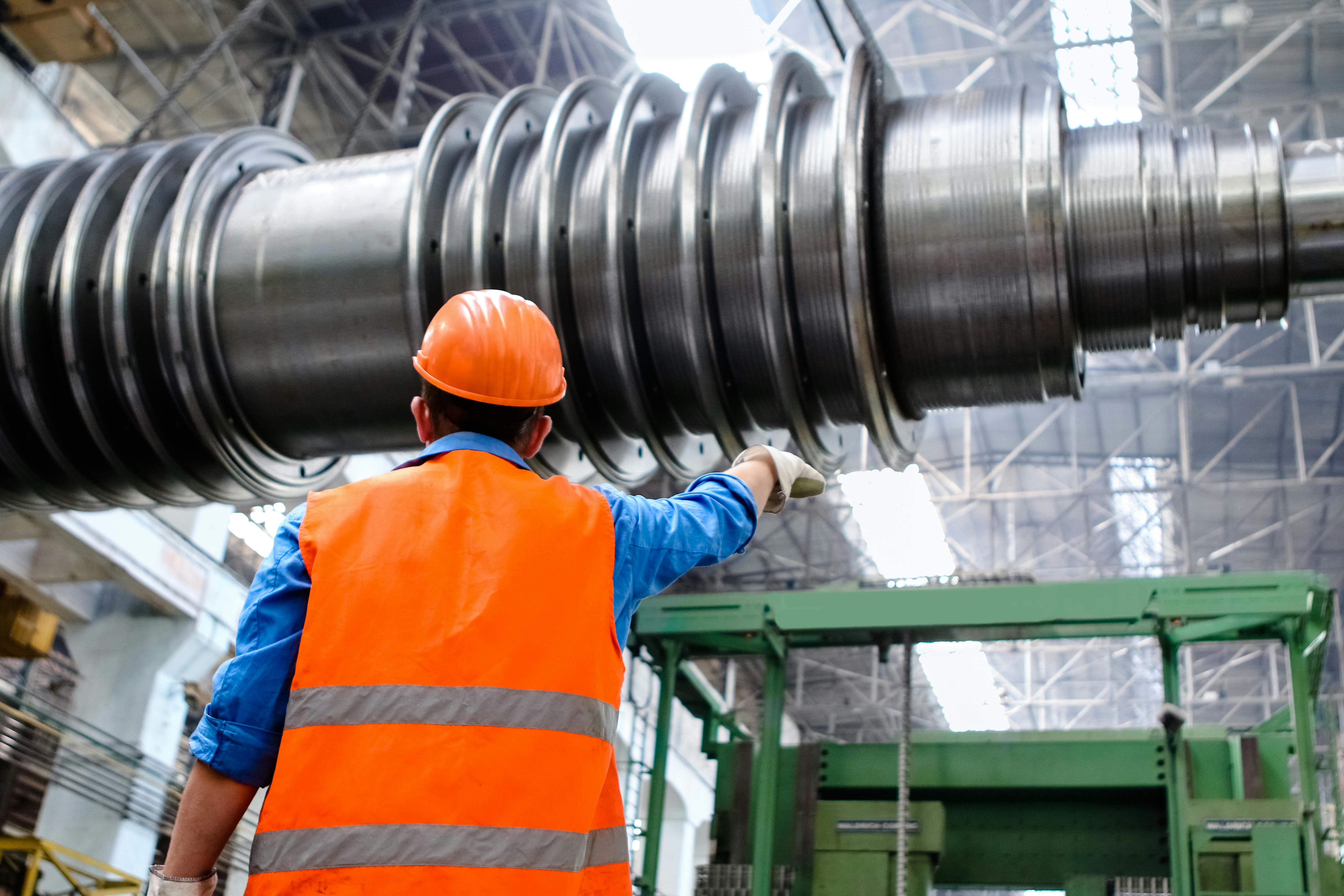
Q1. Could you start by giving us a brief overview of your professional background, particularly focusing on your expertise in the industry?
I am a Metallurgical Engineer with 36 years of experience across various management areas. All along, I have worked in the steel & forging industry. Started my career in manufacturing with the Nation's No. 1 forging company from Pune. Then switched to an alloy steel long-steel manufacturing company in sales & marketing. Here, I gathered experience on the total alloy steel market, competition, growth drivers, etc.
Later, I was given the charge to head the Business Excellence Cell, wherein we drove TQM & ESG Sustainability to a different level of merit. Afterwards, I returned to sales & marketing for a forging unit with 50% exports.
Here, after the CEO superannuated, I was given the responsibility of heading this business unit as an independent profit center. Again, on the last assignment, I came back to alloy steel sales & marketing.
We focused more on market risks & opportunities and developed a long-term strategy.
In addition, I was a member of our Industrial Relations Committee & was Chairman of our employees' credit cooperative society.
Q2. What emerging customer segments or geographies present the strongest growth potential for alloy steel long products in the next 3–5 years?
Emerging customer segments for special alloy steel bars are E Vehicles, Aerospace & defense, and Renewable energy infrastructure, mainly wind power.
With stronger infrastructure development, the auto sector is likely to see very promising growth of 7 to 8% CAGR till 2030. While the Government is expanding charging infrastructure & battery costs are falling, the EV sector is showing awe-inspiring growth, with a 35% CAGR until 2030. The shift is towards lightweight, high-strength materials for fuel efficiency & emission reduction.
Especially in the wind energy sector, steel is required for turbine components to withstand harsh environmental conditions & provide structural integrity. Wind energy will grow at a CAGR of 17% to meet the Government's target of reaching 140 GW by 2030.
With the strong drive of " Make in India ", increasing air traffic & private sector investments, the Aerospace & Defense sector is showing a growth rate of 12.03 % CAGR till 2030. Here, special alloy steels with a high strength-to-weight ratio, high-temperature resistance & extreme toughness will play a dominant role.
When it comes to geographies, the Asia Pacific region has very high growth potential & has more than 40% share globally.
China's & India's growth is driven by rapid industrialization, infrastructure development, and the growth of the automotive and energy sectors. South East Asian countries like Indonesia, Vietnam, Thailand & Malaysia are on a high-speed track of industrial expansion.
Q3. How is the push for green steel and low-carbon materials shaping buying behaviour among global OEMs?
Global OEMs have begun focusing on "green steel " produced through low-carbon methods. The intent is to significantly reduce CO2 emissions & climate impact by using renewable energy, hydrogen & scrap recycling using electric arc furnaces. Typical benchmarks to qualify steel as green are set by the International Energy Agency [ IEA ] or Responsible Steel. India has set " Green Steel Taxonomy."
The Eurozone is very aggressively focused on ESG (Sustainability). The Carbon Border Adjustment Mechanism CBAM will be in force from 2026 for exports to EU countries. It aims to prevent " Carbon " leakage & encourage Global Decarbonization by leveling the playing field for EU industries under its Emission Trading Systems. Here, the steel exporter will be required to report the "Embedded Emissions " in their products & purchase CBAM certificates to cover these emissions, effectively paying a carbon price.
A leading steel manufacturer from Pune has already developed a very special, eco-friendly steel.
Even though the Industry recognizes the need for low-carbon green steels, the traditional route of steel manufacturing using iron ore & blast furnaces is highly economical & hence popular.
Q4. How are advancements such as automation, digital quality systems, or energy-efficient furnaces changing the competitive equation?
Following a mandate from the Government, leading steel manufacturers began focusing on reducing their carbon emissions. A variety of initiatives came into force. Energy-efficient furnaces, alternate fuels in the reheating furnaces, renewable energy sources, automation to improve productivity & reduce losses, focus on resource intensity [yield improvement], circular economy [reuse of plant waste], water conservation, etc., are a few important initiatives towards decarbonization.
Q5. How do you describe the core strengths that enable a steel player to succeed in the alloy steel long products segment, especially in a market that is becoming more differentiated and customer-driven?
For a steel player to succeed, focus on ESG - Sustainability will play a crucial role. For example, if the company is pursuing energy efficiency, water conservation, circular economy, etc., these initiatives are directly helping improve the bottom line. The company can begin by conducting a thorough materiality assessment with multiple stakeholders & deciding on prioritized actions. It can take a leadership position in its own supply chain & drive ESG programs. The company can conduct Life Cycle Assessments at the product & process levels and develop a medium- to long-term strategy for carbon reduction. These actions must fall under the Science-Based Targets (SBTi). Implementing green steel initiatives and branding is equally essential. All these will help the manufacturer to create a very responsible image in society & develop a good brand image.
Q6. How do you view the way leading players are differentiating themselves—whether through product mix, scale, technology, or customer engagement?
The industry's leading players have begun labeling their products with the Green Steel certification. They have articulated their medium- to long-term strategy towards carbon neutrality. The use of the latest state-of-the-art technologies, with a strong focus on renewable energy, differentiates them from others. These leaders have a strong supply chain & scope three emission reduction target.
Q7. If you were an investor looking at companies within the space, what critical question would you pose to their senior management?
- What is the company's long-term strategy for decarbonization? Given the current level of emissions, what is the reduction target & necessary action plan to support the reductions?
- What manufacturing route does the company use: primary or secondary steelmaking?
- What is the plan of the company towards green steel product certifications
- Has the company declared reports under GRI guidelines / BRSR reporting?
Comments
No comments yet. Be the first to comment!