
Inside India’s Manufacturing Shift
Q1. Could you start by giving us a brief overview of your professional background, particularly focusing on your expertise in the industry?
Twelve years might not seem like a long time, but for me, they have been truly transformative. After finishing my master’s in manufacturing, I entered an industry that is both fast-paced and challenging. I’ve worked at every level of the manufacturing supply chain, starting with Tier 1 and Tier 2 suppliers. There, I gained hands-on experience in new product development, facility setup, and IPO planning. This early stage taught me how ideas turn into real manufacturing systems and showed me the importance of being agile, resourceful, and working well across teams—skills that have shaped my career.
Next, I joined a large U.S.-based company that makes connectors, cable assemblies, and harnesses—a real turning point for me. Suddenly, I was doing much more than just mechanical work. I found myself knee-deep in electronic and electromechanical parts, tackling everything from costing and pricing to operations management. The COVID supply chain mess hit hard, but working with senior leaders taught me to think on my feet and stay cool when things got unpredictable. That experience really sharpened my ability to plan ahead and keep moving forward, no matter the challenge.
These days, I’m at a leading automotive OEM, which gives me a front-row seat to the whole industry—from what suppliers can deliver to what customers really want. My job is all about connecting the dots between product planning, future market trends, and big-picture strategies, making sure we’re ready for what’s coming five years down the road. Having worked across the entire supply chain, I’ve learned that it’s not just about processes—it’s about seeing how every piece fits together and how we all move forward as one big ecosystem.
Q2. The 50% Domestic Value Addition (DVA) requirement is a major financial trigger. Technically, which high-value components are currently the hardest to localize without compromising quality?
In my experience, the biggest challenge with the 50% Domestic Value Addition requirement is localizing high-value electronic and EV components without compromising on quality. Mechanical parts—like sheet metal, castings, and harnesses—are relatively straightforward to produce in India thanks to our established supplier base. However, when it comes to advanced components such as lithium-ion battery cells, semiconductor chips, power electronics like inverters and controllers, and precision sensors, local manufacturing is much more difficult.
While working with both Tier-1 suppliers and OEMs, I’ve seen how much we still rely on imports for these technologies. For example, battery cells need huge factories and special chemistries, and India is just starting to build this capability.
Semiconductors and microchips are another big challenge. We have talented designers, but our manufacturing ecosystem is still limited, so making these parts locally is very hard. Traction motors also rely on rare earth magnets—India imports 80 to 95% of these from China. High-end sensors like LiDAR and radar need precise optics and electronics, which are not yet made at scale in India.
In practical terms, this means we can achieve DVA targets for mechanical components, but localizing the electronic core of modern vehicles remains a significant challenge. My experience managing supply chain disruptions during COVID reinforced for me that this dependency is not just a financial concern—it’s a strategic risk. While the industry is moving forward with PLI schemes and giga-factory plans, in the near term, these high-value components will continue to test our ability to localize without sacrificing quality.
Q3. Many OEMs are moving toward fully automated Factories. At what level of automation (%) does the Capex override the OpEx savings from lower labor intensity in the Indian context?
In my experience, the balance between Capex and OpEx savings in Indian manufacturing is quite different from what you see in more industrialized countries.
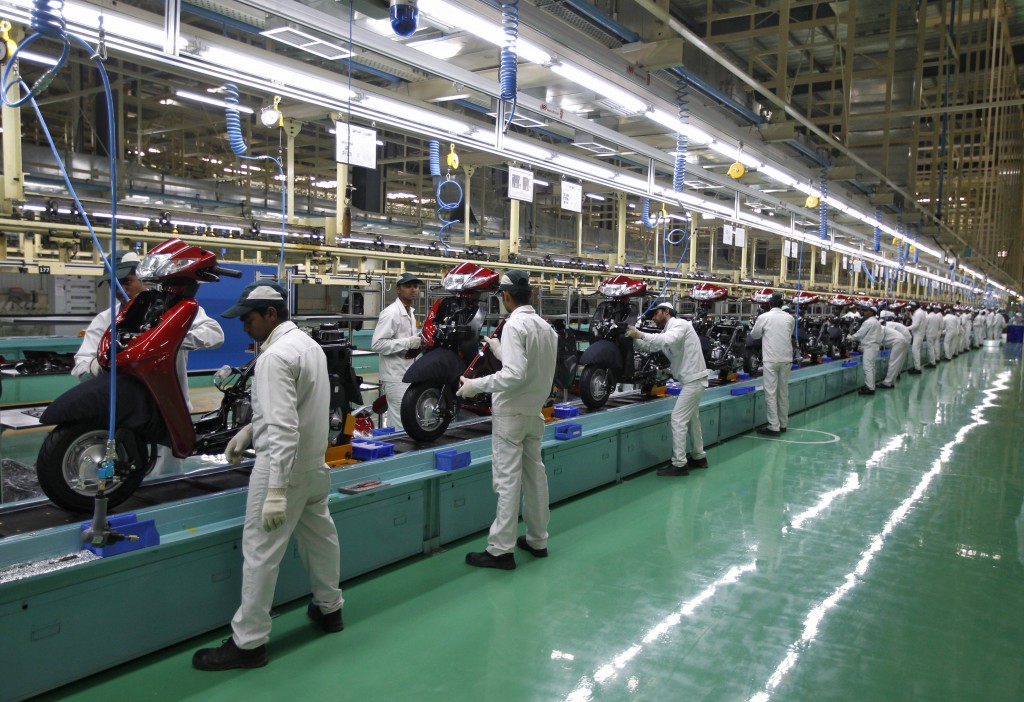
Labor costs in India are still low, so it’s hard to justify very high levels of automation, like above 70 or 80%. Moderate automation, around 40 to 60%, usually works best. You get more consistency, less rework, and better throughput, while keeping Capex manageable. But if you try to fully automate, the big upfront costs for robots and control systems often outweigh the savings from having fewer workers.
I’ve seen projects where management wanted to try fully automated, “lights-out” factories, but when we looked at the numbers, the return on investment was much lower than expected. In India, automation works best when it’s focused on critical, high-precision, or safety-related tasks, not when you try to automate everything. The best results come when automation supports human skills instead of replacing them. In my experience, the right balance is usually in the middle, where Capex is justified by better quality and efficiency, without leading to diminishing returns.
Q4. In a volatile commodity market, how much "Technical Engineering" is realistically possible without triggering a new 6-month homologation cycle?
In my experience, technical engineering in a volatile commodity market is always about balancing innovation with regulatory deadlines. It might look good on paper to redesign or swap materials to deal with price changes, but in reality, any change that affects performance, safety, or emissions can start a new homologation cycle, which often takes six months or more.
What works in practice is making engineering changes that stay within the ‘non-critical’ zone, like improving fasteners, brackets, or harness layouts, or switching to different grades of steel or plastics as long as the function stays the same. These changes help manage costs without needing new validation.
But if you change high-value parts like engines, battery packs, brakes, or electronics, regulators see it as a new setup, and you have to go through homologation again. So, in reality, you can make technical changes to about 20 to 30% of the bill of materials without triggering homologation, as long as you’re careful about what you change.
In a volatile market, the key is knowing which changes you can make—like swapping materials, simplifying designs, or retooling suppliers—without affecting the homologation timeline. In my view, this judgment is what sets strategic engineering apart from just cutting costs.
Q5. Industry-wide, Digital Twins are marketed to reduce commissioning time by 30%. From a project management lens, where does the "drift" usually occur that leads to a 4–8 week delay in Start of Production (SOP)?
Digital Twins promise to slash commissioning time by 30%, but honestly, I’ve seen plenty of projects where SOP still gets pushed back by a month or two. From a project management angle, the real hiccup isn’t the simulation—it’s the handoff from the digital world to the shop floor. In my experience, delays crop up when the assumptions in the model don’t line up with what’s actually happening onsite—maybe suppliers aren’t ready, there are last-minute design tweaks, or old machines just weren’t modeled right.
Another big reason for delays? Getting everyone on the same page. The digital twin might look perfect, but if procurement, tooling, and vendors aren’t all in sync, things slow down fast. I’ve seen times when virtual commissioning got the green light, but once we were on the floor, surprises like calibration mix-ups, missing operator training, or compliance snags popped up—stuff the model just didn’t catch.
So yes, Digital Twins cut down on engineering back-and-forth, but most delays still creep in during the handover—when digital confidence meets the messy realities of the shop floor. To me, the bottom line is: Digital Twins are awesome tools, but they’re no substitute for solid project management. Those 4–8-week delays? They’re usually more about how well the team handles change and keeps everyone moving together than about the technology itself.
Q6. As vehicles move toward 'Software-Defined' architectures, where is the primary technical bottleneck in End-of-Line (EOL) testing?
These days, the hardest part of End-of-Line testing isn’t the nuts and bolts anymore—it’s making sure all the software talks to each other. Back in the day, EOL testing was about checking mechanical tolerances, electrical hookups, and basic functions. Now, with a bunch of ECUs and millions of lines of code, the real challenge is making sure every piece of software gets along on the vehicle’s network.
Delays usually happen in three main areas. First, managing software versions—when suppliers deliver ECUs with different firmware, integration at EOL becomes very difficult. Second, making sure vehicles are ready for over-the-air updates—testing that the software can handle secure updates takes extra time. Third, cybersecurity and compliance checks are essential, but they also make the EOL cycle longer because every patch or security step must be tested before SOP. In my experience, the main challenge is not the physical test benches but managing software validation in real-world conditions.
In India, where OEMs have to balance cost pressures with global standards, this often means longer EOL cycles. What I’ve learned is that unless you manage software releases and keep suppliers in sync from the start, the EOL phase can easily become the main bottleneck that delays production.
Q7. If you were an investor looking at companies within the space, what critical question would you pose to their senior management?
If I were putting my money in, the first thing I’d ask senior management is: ‘How well can your business handle the switch from making money on hardware to building value through software?’
Looking at the supply chain, I’ve seen plenty of companies who are champs at manufacturing, but get tripped up by digital platforms, over-the-air updates, and making money long after the product leaves the factory. These days, investors aren’t just counting widgets—they want to see if your people, systems, and partnerships are ready for a world where software drives the customer experience and keeps the revenue flowing.
For me, the big test for management is whether they can lay out a clear plan that keeps today’s operations humming while also gearing up for the digital future. After seeing all the shifts from mechanical to electronic, I’d want to know how they’ll bring suppliers on board, tackle cybersecurity, and turn data into profits—without dropping the ball on quality or costs. How they answer tells you if the company’s built to thrive in the next decade, or just coast along for now.
Comments
No comments yet. Be the first to comment!