
Spiral Conveyor Technology: Industry Gamechanger
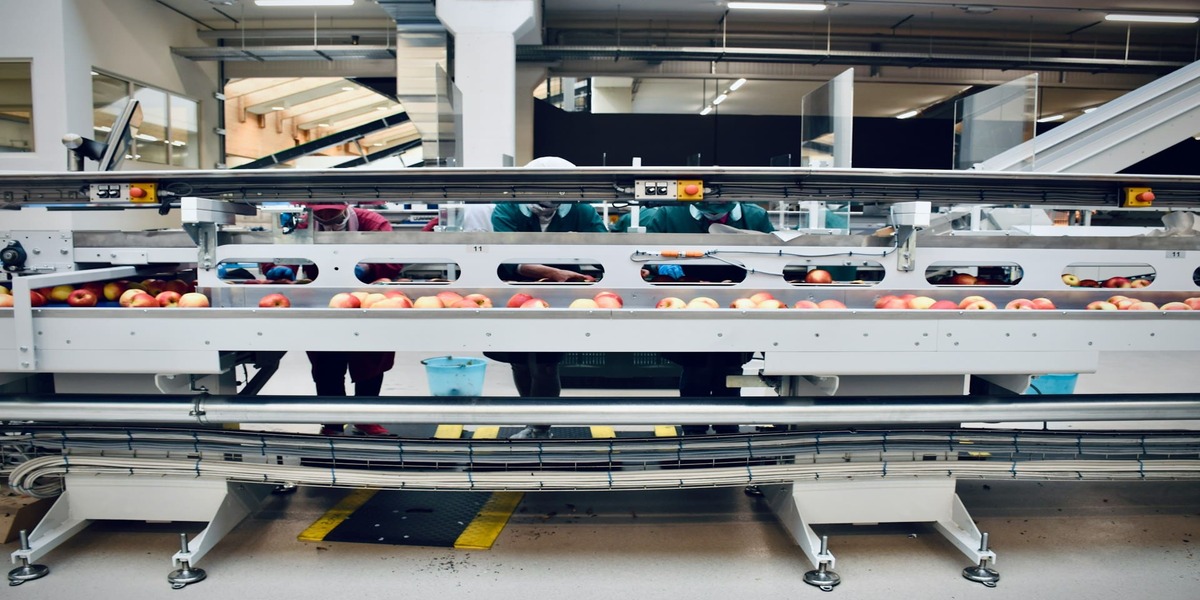
Spiral conveyor technology is widely used in the processing industry for product conditioning, conveying, and accumulation. It’s a versatile and efficient solution for managing and conditioning a large volume of products in a small footprint.
A spiral is a helical surface, also called a helicoid, where a point on the ruled surface will travel up or down the helix based on the direction of rotation.
The principle behind spiral technology is the movement of product on a belt or surface, which moves in a helix upward or downward, driven by a rotating member, either a central shaft with the drive or a drum connected to the drive.
The earliest known usage of spiral/helicoid surface was as an Archimedean screw by Egyptians around 250BCE as a machine used for lifting water from a low-lying body of water into irrigation ditches; water is lifted by turning a screw-shaped surface inside a pipe like a modern-day screw pump.
Types and Applications of Spiral System
The spiral system mainly comprises a drive, a helical carry way path, a belt or surface to carry the product, and support structure.
Depending on the driving mechanism used in the spiral system, there are different types of spirals.
- Vibrating Spiral Elevator
- Friction Driven Spiral
- Positive Driven Spiral
- Edge Driven Spiral
- End Drive Slat chain Spiral
The most common applications where spirals are deployed are:
- Cooling
- Freezing
- Chilling
- Proofing
- Heating
- Buffering/Accumulation
- Elevator
Selection of Spiral System
The right selection of spiral system for a specific application is very crucial for the effective utilization and performance of the entire line. If selection goes wrong, the entire production flow can get disturbed, and the spiral can become a bottleneck for the line.
Some of the critical details to be defined before the selection of a spiral system are :
- Layout and orientation of the spiral system
- Product type and dimensions
- Product entry and exit height
- Product infeed pattern, transfers, and orientation
- Product dwell time in the spiral
- Temperature, humidity, and airflow requirement
Getting a spiral system to deliver the desired output and performance may require design considerations, operational settings, maintenance, and operating conditions in perfect sync. Getting all these factors
favorable in a real operating scenario is not always possible. The prudent way is to start with a thorough study of the products and process requirements, followed by a detailed design phase, which should capture all the critical performance parameters that can be translated into the spiral system.
Frequently Asked Questions
1. How do you foresee the role of Spiral Conveyor Technology evolving in response to shifts in consumer preferences and market trends?
The continuous evolution of spiral conveyor technology was a response to shifts in consumer preferences and market trends. Some of the trends are:
Increased Efficiency and Throughput: Manufacturers might develop conveyor systems with improved speed, precision, and flexibility to meet these demands.
Space Optimization: Future advancements may focus on designing compact yet high-capacity spiral conveyors that efficiently utilize vertical space.
Integration with Automation and Robotics: This integration can enhance efficiency, accuracy, and scalability while reducing labor costs.
Comments
No comments yet. Be the first to comment!