
The Emergence Of Genetic Engineering In Agriculture

Genetic engineering in agriculture refers to altering the genetic makeup of plants, animals, or microorganisms to produce desirable traits. This is done by introducing, removing, or modifying specific genes in their DNA. The resulting organisms are commonly referred to as genetically modified (GM) or genetically engineered (GE) crops, animals, or microorganisms. Genetic engineering in agriculture aims to increase crop yield, improve disease resistance, enhance nutritional value, and reduce the use of pesticides.
Most Popular Genetically Modified Crops
The most popular genetically modified (GM) crops are:
Soybean
GM soybeans are widely grown and are used for food, feed, and industrial products such as biodiesel.
Corn
GM corn is used for food, feed, and industrial products, including biofuels and chemicals.
Cotton
GM cotton is widely grown for fiber, oil, and food.
Canola
GM canola is used for food, feed, and industrial products, such as biodiesel.
Sugar Beet
GM sugar beets are used for sugar production.
Regulations and Acceptance of Genetically Modified Organisms
The regulation and acceptance of genetically modified (GM) foods vary between countries. While some countries have embraced GM technology and allowed the cultivation and sale of GM crops, others have placed restrictions on their use or banned them altogether.
Countries that have allowed the cultivation and sale of GM crops include:
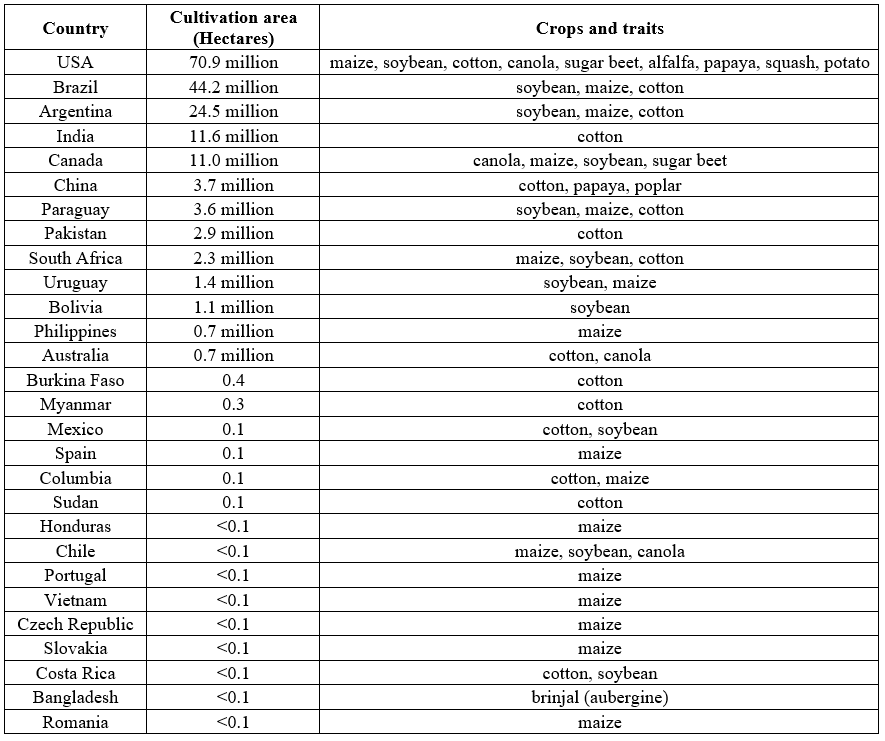
Total: 179.7 million hectares
Countries that have placed restrictions on the use of GM crops include:
- European Union (EU)
- Australia
- New Zealand
Benefits of Genetically Modified Foods
Genetically modified (GM) foods have the potential to offer several benefits, including:
Increased Crop Yield
GM crops have been designed to have improved resistance to pests, diseases, and environmental stress, which can result in higher crop yields and reduced losses due to crop damage.
Improved Nutritional Value
GM crops can be engineered to have enhanced nutritional value, such as increased levels of essential vitamins and minerals.
Reduction in the Use of Pesticides
GM crops can be engineered to be more resistant to pests and diseases, which can result in a reduction in the use of pesticides.
Increased Tolerance to Environmental Conditions
GM crops can be designed to be more tolerant to environmental stress, such as drought, flooding, and salinity, making them more resilient and increasing the stability of food supplies.
Improved Food Quality
GM crops can be engineered to have improved qualities such as increased shelf life and enhanced flavor.
Side Effects of Genetically Modified Foods
The potential side effects of consuming genetically modified (GM) foods are a topic of ongoing scientific and public debate. While some studies have suggested that GM foods may negatively affect human health and the environment, the consensus among scientific and regulatory organizations is that GM foods are safe for human consumption.
However, it is essential to consider the following potential side effects of GM foods:
Allergenicity
GM foods can potentially cause allergic reactions in some individuals.
Toxicity
GM foods may contain toxic substances that could harm humans and other animals.
Antibiotic Resistance
The use of antibiotics in GM food production can contribute to the development of antibiotic-resistant bacteria, which can harm human health.
Unintended Ecological Consequences
The release of GM organisms into the environment can have unintended ecological consequences, such as developing pesticide-resistant pests and declining beneficial insects and other wildlife.
Economic Impact
GM crops can have negative economic impacts on farmers and communities, such as increased seed prices, reduced seed diversity, and reduced market access for non-GM crops.
It is important to note that GM foods' benefits and side effects will depend on the specific crop and intended use and that the technology is still evolving.
Further research is needed to fully understand GM foods' potential benefits and risks and ensure that they are used responsibly and sustainably.
Should we Consume GM Foods?
Some studies have suggested that GM foods may have potential health risks, such as toxicity, allergenicity, and antibiotic resistance, while others have found no evidence of harm.
However, due to the complexity of the human body and the interplay between genes, diet, and environmental factors, it is difficult to determine the long-term effects of consuming GM foods with certainty.
Given the limited research, it is important to approach GM foods' consumption cautiously and continue research to fully understand their potential risks and benefits. It is also important for regulatory agencies to thoroughly evaluate the safety of GM foods before they are allowed on the market.
This article was contributed by our expert Bilal Derian
Frequently Asked Questions Answered by Bilal Derian
Q1. What technology is used in GM plants?
There are several technologies used in genetically modifying organisms, including:
Recombinant DNA Technology
This involves the transfer of specific genes from one organism to another, creating a genetically modified organism (GMO).
CRISPR/Cas9
This is a genetic engineering technology that uses a type of RNA molecule and an enzyme to cut and manipulate DNA at specific locations.
TALENs (Transcription Activator-Like Effector Nucleases)
This technology uses a specific type of protein to cut DNA at a specific location, allowing for the insertion or deletion of specific genes.
Zinc Finger Nucleases (ZFNs)
This technology uses a type of protein to cut DNA at specific locations, allowing for inserting or deleting specific genes.
RNA Interference (RNAi)
This technology uses small RNA molecules to target and degrade specific messenger RNA molecules, preventing the expression of a specific gene.
Virus-induced gene silencing (VIGS)
This technology uses a virus to deliver small RNA molecules to a plant, suppressing specific genes.
These technologies are used in genetic engineering to create genetically modified organisms with desired traits such as increased resistance to pests and diseases, improved yields, and increased tolerance to environmental stress.
Q2. Why are Genetically modified crops allowed in some regions but restricted in other parts of the world? And what factors impact this decision?
Scientific Evidence
In some regions, the decision to allow or restrict GM crops is based on the scientific evidence available regarding their potential health and environmental risks and benefits. Some countries have stricter regulations and require more evidence of safety before allowing the use of GM crops.
Public Perception
Public opinion about GM crops can play a role in the decision-making process. Some people may be concerned about GM crops' safety, while others believe they offer important benefits such as increased food security.
Economic Interests
GM crops can provide economic benefits such as increased yields and reduced costs for farmers. However, some countries may restrict their use due to concerns about protecting domestic farmers and ensuring food security.
Political Considerations
Political considerations can also play a role in allowing or restricting GM crops. Some countries may be influenced by the opinions of their trading partners or international organizations.
Regulatory Framework
The regulatory framework in each country also plays a role in the decision to allow or restrict GM crops. Some countries may have more stringent regulations, while others may have more lenient regulations.
Q3. What is the key factor driving the market of genetically modified seeds?
Growing Population
With the world's population projected to reach 9.7 billion by 2050, there is a growing need to increase food production to meet the demands of a growing population. GM seeds can help to increase yields and productivity, helping to meet this demand.
Climate Change
Climate change is having a significant impact on agriculture, with changes in weather patterns affecting crop yields and food production. GM seeds can be engineered to be more resistant to environmental stress such as drought, heat, and pests, helping to increase agricultural productivity in a changing climate.
Increased Profitability
GM seeds can provide significant economic benefits to farmers, including increased yields, reduced costs, and improved quality. These benefits can drive the demand for GM seeds as farmers look for ways to enhance their profitability. With GM seeds, farmers will also spray less pesticides to combat pests.
Q4. What is the leading segment in the genetically modified seeds market?
The leading segment in the genetically modified (GM) seeds market is crops such as corn, soybeans, cotton, and canola. These crops are widely grown globally and are often engineered to provide specific benefits, such as increased yields, improved resistance to pests and diseases, and enhanced tolerance to environmental stress.
Corn, for example, is a widely grown crop that is often genetically modified to provide increased yields, improved resistance to pests and diseases, and improved tolerance to environmental stress.
Soybeans are another widely grown crop that is often genetically modified to provide improved resistance to pests and diseases and improved oil content.
Cotton is another important crop that is often genetically modified to improve resistance to pests and diseases and improve fiber quality. Canola is also widely grown and often genetically modified to provide improved oil content, resistance to pests and diseases, and improved tolerance to environmental stress.
Comments
No comments yet. Be the first to comment!