Q1. Could you start by giving us a brief overview of your professional background, particularly focusing on your expertise in the industry?
I have over 24 years of experience in supply chain and operations. My career began as a Navigating Officer in the Merchant Navy, where I spent five years at sea before moving into corporate logistics.
After completing my MBA from Vanderbilt University, I joined Caterpillar India in 2008. There, I established the Asia-Pacific Packaging Centre of Excellence, scaling the team to 50 engineers and achieving $20 million in revenue. I also delivered $15 million in annual savings through returnable packaging programs.
I then spent six years at Amazon India, where I:
• Led multiple fulfillment centers
• Launched the national cross-dock network
• Served as Site Leader for some of the largest FCs in the region
Between 2023 and 2025, I led the growth of Apollo Supply Chain’s automotive and e-commerce vertical, increasing revenue from ₹5 crore to over ₹30 crore. I also established their Centre of Excellence and launched a direct-to-consumer fulfillment network.
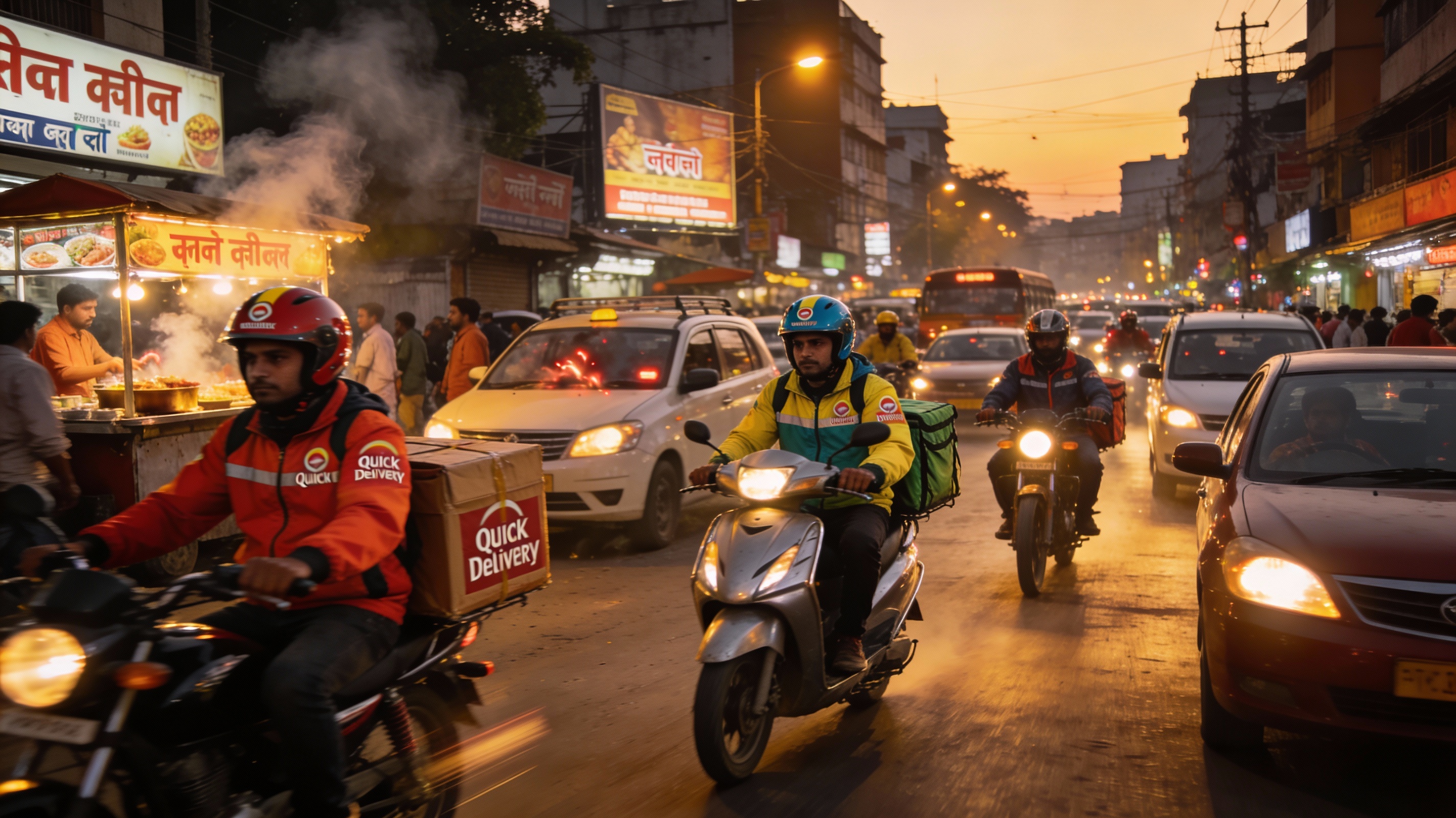
Since September 2025, I’ve been with Zepto as Head of Warehouse Operations & Centre of Excellence.
My experience spans manufacturing (Caterpillar), global e-commerce (Amazon), traditional 3PL (Apollo), and now quick commerce (Zepto) — from factory floor design to 10-minute delivery execution.
Q2. What key structural shifts in India’s e-commerce and quick commerce sectors are reshaping demand for nationwide fulfilment networks, and how are these changes influencing profitability for 3PL providers?
Three big shifts are shaking things up right now:
Quick commerce network redesign: The old model of 5–6 big hubs has flipped to 500–600 dark stores, all within a 2–3 km radius. Everything's gone hyperlocal for fulfillment.
Tier-2/3 acceleration: These smaller markets are outpacing metros in growth, so there's suddenly huge demand for mid-mile and last-mile setup where none existed before.
Margin pressure: Quick commerce runs on razor-thin economics—a dark store typically needs about 2,000 orders a day just to break even.
For 3PLs, this means opportunity in the form of strong demand for Grade-B warehousing close to population centers, but also real risks like high upfront capex, short-term contracts, unpredictable utilization, and even potential 30-day shutdowns. The winners will be those 3PLs that can offer flexible pay-per-order models and scale up (or down) 50 stores in 60 days.
Q3. Looking ahead, which emerging AI technologies in warehousing and logistics do you believe will significantly enhance operational scalability and create competitive advantages in fast-growing markets?
Three capabilities are already delivering measurable ROI:
AI-driven slotting and forward placement
Micro-market demand-based SKU placement is improving productivity by 20–25%.
Dynamic batching and wave automation
Waves generated based on live rider arrival and promise times are reducing wait times by 40–50%.
Predictive forecasting with automatic replenishment
Pin-code level forecasting has reduced stockouts from 8–10% to <2%.
Computer vision for damage detection and put-to-light accuracy is advancing quickly, but the three above are already deployed and self-funding.
Q4. Based on your experience, what innovative network design strategies have proven most effective in supporting rapid growth and high throughput in e-commerce supply chains?
Two proven playbooks that work:
Mother-hub + satellite model: A big 200K–500K sq. ft. mother hub feeds 15–20 spoke facilities within a 100–150 km radius—striking the right balance between cost and speed. This scaled big time at Amazon and now at Zepto.
Pop-up and temporary fulfillment centers for peaks: Skip the permanent capex and run 3–6 month pop-up FCs for Diwali or Prime Day instead. This has saved hundreds of crores.
A third layer is cross-docking for the top ~20% fast movers, which saved Amazon ₹324M annually.
Q5. In the context of hyperlocal fulfillment in tier-2 cities, which performance metrics have you found most critical in differentiating top-performing operations driving accelerated growth?
Only four matter:
Orders per store/day: 2,000+
Picker productivity: 45–50 UPH
On-time delivery: 95%+
Inventory turns: 18–22× per month
If these are strong, the store is profitable — everything else is noise.
Q6. Could you share examples of major supply chain challenges faced during peak demand periods, and what innovative solutions resulted in significant cost and efficiency improvements?
Diwali 2017 with Amazon: Demand doubled overnight. We quickly set up pop-up fulfillment centers with 3PL partners, handling 30% more volume than our planned capacity—at a lower cost than building permanent ones.
Festive 2024 in quick commerce: Labor shortages hit hard. By using flex staffing and tweaking incentives on the fly, we kept over 90% of our manpower available.
The real game-changers weren't just adding more people or space, but smart software and flexible contracts
Q7. If you were an investor looking at companies within the space, what critical question would you pose to their senior management?
Show me the bottom 25% of dark store P&Ls — and tell me when each one will either break even or be shut down.
If the answer comes back as blended averages, that’s a red flag for me and I walk away.
In quick commerce, shutting down loss-making stores fast matters more than opening new ones fast.