
Opportunities & Risks In India’s Energy Midstream
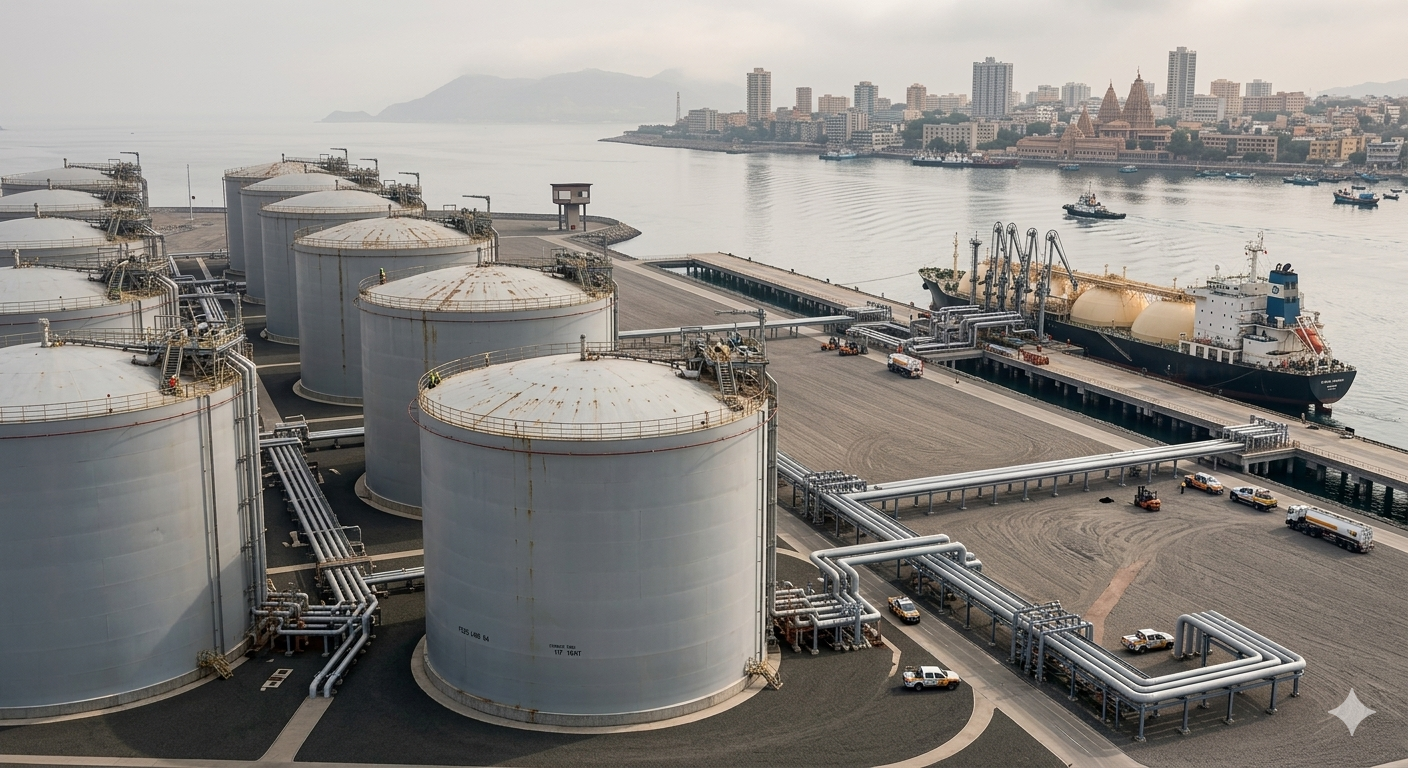
Q1. Could you start by giving us a brief overview of your professional background, particularly focusing on your expertise in the industry?
I have worked as a Mechanical Engineer in India, developing my skills through extensive experience in the Oil and Gas industry, including both downstream and midstream infrastructure. My core expertise in engineering services delivery lets me manage all mechanical project execution and asset integrity management tasks, which I use to ensure operational compliance at large hydrocarbon facilities that include refineries, oil marketing terminals, and storage installations and their connected pipeline systems.
Over multiple years of experience, I have managed teams across different fields to perform tasks related to mechanical maintenance and reliability improvement, inspection governance, and fixed equipment integrity, in accordance with API and ASME standards. My work has included project compliance, contract performance management, and continuous improvement initiatives to enhance safety, uptime, and lifecycle asset value for essential assets.
Q2. Looking ahead to 2030, what mix of infrastructure projects offers the strongest risk-adjusted returns in India's energy midstream, balancing traditional fuels with energy transition opportunities?
The most effective risk-adjusted investment returns from India midstream infrastructure will emerge through 2030 from an investment strategy that combines essential petroleum logistics with assets ready for future growth.
The development of traditional fuel systems will continue to serve essential functions, as India needs fuel to meet its growing industrial and transportation needs. The development of multi-product pipelines together with upgraded terminals and strategic storage facilities will generate permanent returns that resemble regulated company profits.
The transition opportunities that show the most potential for growth include LNG import facilities and regasification systems, hydrogen-ready pipeline networks, biofuel blending terminals, and ammonia export logistics. The best execution approach for projects requires building facilities that combine modular design with flexible operations and integration into current petroleum infrastructure.
Q3. How will India's planned refining capacity expansions influence CAPEX needs and ROI timelines for new petroleum oil marketing terminals, especially in hybrid inland-port locations?
The planned expansion of India's refining capacity will create a greater need for downstream evacuation and distribution infrastructure, leading to increased capital expenditures for the construction of new terminals.
The hybrid inland-port terminals, which connect coastal supply chains with inland consumption centers, will need greater initial funding because their operations require multiple modes of transportation, including jetty pipelines and rail loading, road gantries, and storage automation. The assets deliver multiple advantages because they achieve faster throughput ramp-up, which results in improved ROI timelines.
The ROI of projects will increasingly rely on their geographical benefits, their capacity to process multiple product types, and their preparedness to use future fuel types such as SAF and ethanol blends. Terminals that function as regional distribution centers will provide better financial returns than independent depot operations.
Q4. What infrastructure constraints could limit India's aviation fuel export growth, and what types of private investments are needed to address them?
India's aviation fuel export growth faces multiple infrastructure bottlenecks, which include:
Ports have restricted the export of ATF through dedicated handling facilities.
There are two major deficiencies: insufficient dedicated storage space and missing quality-approved pipelines.
Major coastal terminals experience operational delays due to jetty and berth congestion.
The existing facilities lack proper systems for combining fuel components and their respective blending and additive injection processes.
The system lacks sufficient capacity to handle high-volume transportation through both rail and road networks.
The sector requires private funding to develop specialized aviation fuel facilities, which include dedicated port storage spaces and automated systems for quality testing, secure pipeline links, and expanded hydrant systems at airport locations. The public-private partnership framework shows high potential for success in developing port infrastructure.
Q5. In recent oil marketing terminal projects, what general factors favor brownfield expansions over greenfield developments amid land scarcity challenges?
In India’s current environment, brownfield expansions are increasingly favored over greenfield terminals because of multiple practical benefits.
The two primary obstacles to developing new sites are:
- The existing system provides access to both pipelines, rail sidings, and highways
- The project execution process is faster due to existing permits and utilities
The project costs less because of lower capital expenditures per additional kilolitres of storage capacity
The existing supply chains and customer base become better integrated through this solution
Brownfield projects offer two advantages:
They simplify environmental clearance processes and enable gradual expansion, which becomes essential during periods of changing energy demand patterns.
Q6. How is the shift toward sustainable aviation fuels broadly reshaping the design requirements for aviation fuel farms?
The Sustainable Aviation Fuels (SAF) transition is transforming the design of aviation fuel farms.
Future fuel farms must support multi-grade storage, segregated handling, and blending capability between conventional ATF and SAF. The design process now focuses on three primary elements, which include materials compatibility, contamination control, and all the needed components of quality assurance systems.
The implementation of automation and digital custody transfer systems, improved filtration systems, and traceability infrastructure will help organizations achieve global sustainability certification standards. Fuel farms have transformed from basic storage facilities into advanced energy logistics centers that operate as integrated high-capacity facilities.
Q7. If you were an investor looking at companies within the space, what critical question would you pose to their senior management?
The most important question I need to ask senior management at midstream energy companies is their assessment of the company's sustainability over the next 10 to 15 years. Another question I would ask is about their current investment decisions, which will help sustain their asset portfolio's operational viability during the energy transition period. The actual threat to operations goes beyond execution risk, as enterprises face the risk that their assets will become outdated. I need to explain my research plan since I need to investigate these areas in depth. The terminal systems, together with the pipeline network and storage facilities, should function correctly when introducing new products, such as SAF, biofuels, LNG, ammonia, and hydrogen blends. The company needs to develop a strategic plan that will help it maintain steady cash flow from petroleum transportation operations while simultaneously pursuing new business opportunities in transitional infrastructure development.
The organization protects its financial returns by using long-term contracts, which include throughput guarantees and utilize multiple customer bases. The company is developing digital integrity and reliability systems, which will result in lower lifecycle costs and higher operational availability. The company needs to define its capital allocation discipline while deciding between pursuing growth opportunities or constructing infrastructure assets that will deliver predictable ROI. The essential point for investors to assess is whether your infrastructure will maintain its value as a vital and compliant asset through 2035, which extends beyond 2026.
Comments
No comments yet. Be the first to comment!