
Optimizing Agri-Supply Chains
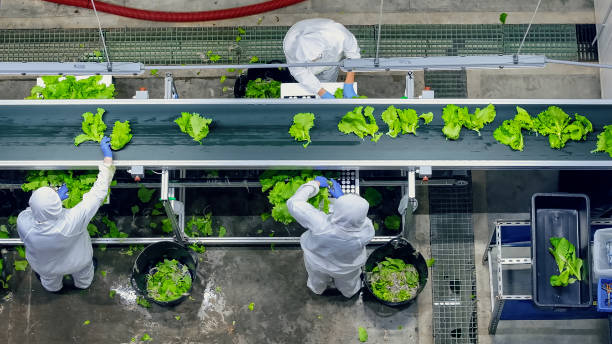
This article talks about strategies for optimizing agri-supply chains, covering procurement, digitization, team management, and future growth opportunities for long-term efficiency and resilience.
Q1. You’ve managed procurement, warehouse operations, and export supply chains across multiple categories. Could you briefly outline how your responsibilities evolved as you moved into senior operations and business-head roles?
Early on, responsibilities were very execution-driven: daily buying from mandis and suppliers, rate discovery, basic hedging decisions, coordinating with transporters, and supervising loading, unloading, and primary QC at warehouses and packhouses. As you moved into senior roles, the focus shifted to category P&L, network design, contract structures, credit and risk policies, and building processes for procurement, warehousing, and exports rather than personally firefighting every issue. At business-head level, responsibilities further expanded to long-term sourcing strategy, capex decisions for hubs, tech/tool selection, key account management, and building leadership depth so that operations run through dashboards and reviews rather than only ground presence.
Q2. With agri-commodities facing frequent price volatility and supply disruptions, how do you approach supplier diversification and sourcing strategies to maintain cost stability and quality consistency?
For volatile agri-commodities, the base is always a diversified supplier portfolio by geography, farm belts, and supplier type (farmers/FPOs, processors, traders), with clear volume splits so no single supplier or region crosses a set dependency threshold. On top of that, you combine different commercial models—spot, short-term contracts, and where possible hedging/forwards or formula pricing—so that part of the volume is price-protected while part stays flexible for market opportunities.Finally, you standardize specs and grading, build preferred-supplier programs, and link better terms to performance on quality, fill rate, and documentation so diversification does not dilute standards.
Q3. Digital tools for forecasting, procurement analytics, and inventory visibility are gaining traction in agri-supply chains. What capabilities do you see as most essential for improving accuracy and reducing operational risk?
The most critical capability is end-to-end visibility: tools that integrate forecasts, open POs, in-transit stock, and warehouse inventory so planners see a single, near-real-time truth across the network. On forecasting and procurement analytics, you look for predictive models that ingest weather, price trends, historical demand, and crop data to recommend buying windows, quantities, and risk scenarios rather than just static plans. For execution, must-haves include mobile procurement apps, IoT-based quality and condition monitoring, exception alerts, and simple dashboards for ground teams so decisions improve without adding complexity.
Q4. Quality control, product traceability, and compliance expectations are rising in both domestic and export markets. How do you balance speed of procurement with stricter quality and documentation requirements?
The way to balance speed with rising QC and documentation is to design “quality by process”: pre-agreed specs, digital checklists, photo/QC uploads from field and warehouses, and batch-level IDs so traceability is created as a by-product of normal work. You define different QC layers based on risk—e.g., high-risk export batches get full lab tests and documentation packs, while lower-risk domestic flows follow lighter but still standardized checks. Strong vendor pre-qualification, approved-panel sourcing, and digitized document workflows reduce last-minute surprises so containers and domestic dispatches move fast without compromising compliance.
Q5. Warehouse operations are shifting toward automation, optimized layouts, and real-time tracking. From your experience launching and scaling hubs, what practices have most improved throughput and minimized losses?
Throughput in your hubs improved the most when you fixed basics first: ABC-based slotting, fast-movers near docks, clear one-way material flow, and standard SOPs for receiving, put-away, picking, and dispatch. Adding RF/barcode-based WMS, systematic cycle counting, and simple automation (conveyors, automated weighing, sorting) reduced manual errors, pilferage, and dwell time, especially for perishable and high-value commodities.Training multi-skilled teams, defining productivity and shrinkage KPIs, and daily visual reviews (dashboards, Gemba walks) then locked in the gains and minimized damages and expiries.
Q6. Managing high-volume teams in procurement and warehouse environments requires strong engagement and clarity. What approaches have you found most effective in building accountable, high-ownership teams?
In high-volume procurement and warehouse environments, what works best is role clarity plus numbers: every buyer, supervisor, and storekeeper has 3–5 clear metrics (e.g., OTIF, wastage, stock accuracy, recovery, payment cycle) they own.Regular short reviews—daily huddles and weekly performance check-ins—keep focus on issues while public dashboards and simple incentives link team rewards to safety, quality, and cost outcomes, not just volume.Finally, involving ground teams in process design, enabling cross-training, and backing them when they escalate risks builds ownership and reduces the “sir will handle” mindset.
Q7. If you were advising leadership or investors on where the next major opportunities lie in agri-procurement and supply chain operations, which areas would you prioritize for long-term efficiency and growth?
The biggest long-term opportunities lie in:
- Tech-enabled sourcing platforms that connect exporters/processors directly with farmers/FPOs, compressing the chain and improving both farm-gate realization and procurement efficiency.
- Data and analytics layers—crop intelligence, price and weather-linked buying engines, risk dashboards—that sit on top of existing operations and materially reduce volatility and waste.
- Modern integrated infra: multi-commodity aggregation hubs, cold-chain–linked warehouses, and selective automation that bring down handling losses, standardize quality, and make agri supply chains investable at scale.
Comments
No comments yet. Be the first to comment!