
Ghana’s EV Aftermarket: Trends & Facts
Q1. Could you start by giving us a brief overview of your professional background, with a particular focus on your industry expertise?
I have spent over a decade in Ghana’s automotive aftermarket, focusing on strategic sales and business development. My experience includes working with multinational organizations such as CFAO Ghana Limited, C. Woermann Ghana Limited, and Robert Bosch Ghana Limited. My core expertise lies in the automotive sector, particularly in spare parts management for heavy commercial vehicles, light commercial vehicles, and passenger cars.
I have achieved strong results in product-specific categories, especially automotive batteries, and have developed expertise in cross-referencing products across different manufacturers. I have also worked on vehicle make and model determination to meet Ghanaian market demand and have a solid understanding of the local lubrication market.
Q2. What are the quantified forecasts for aftermarket revenue growth in EV-related parts and accessories in Ghana and Africa, including projected CAGR and high-potential product segments?
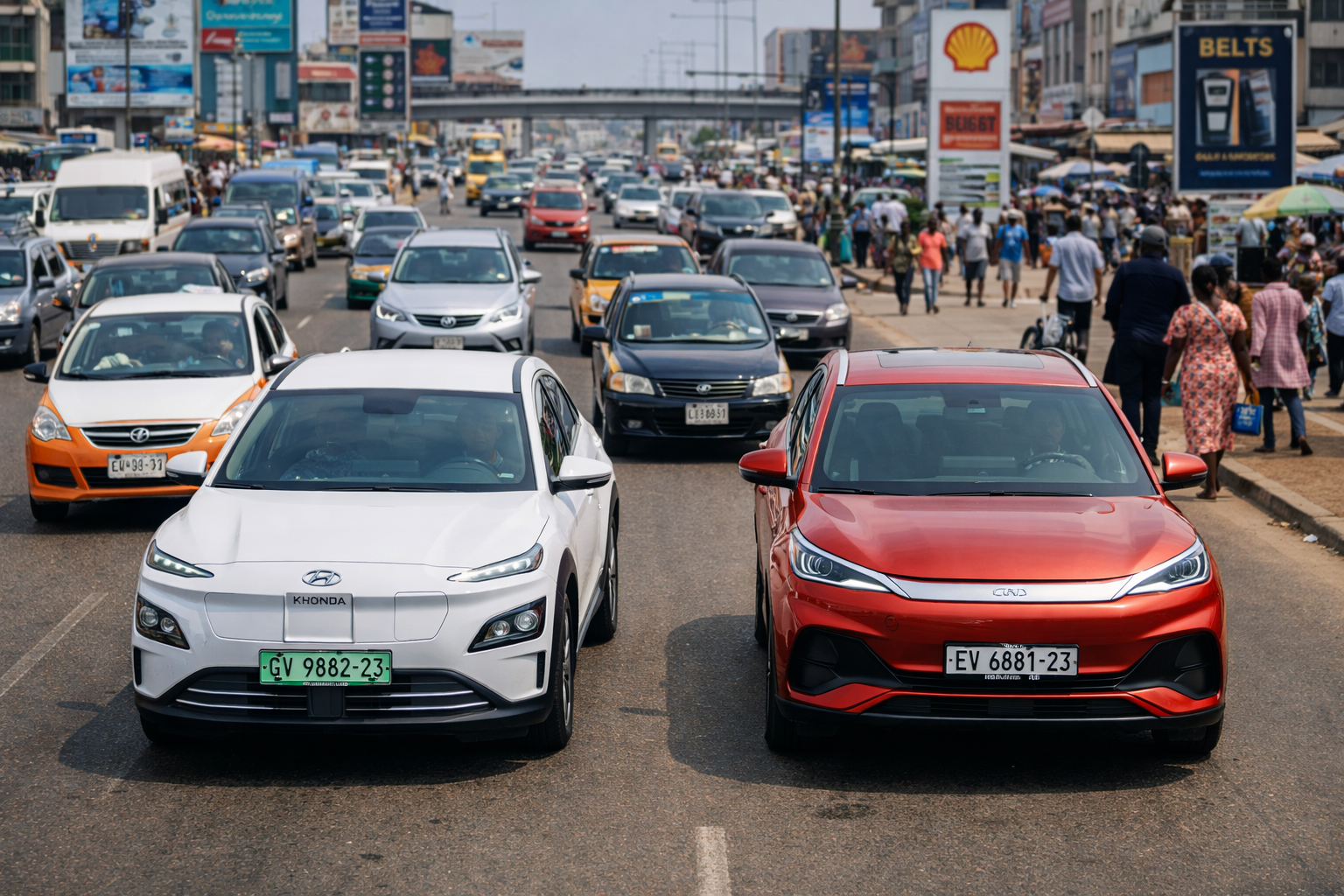
Electric vehicle adoption in Ghana and across Africa is still in its early stages. EVs currently make up about 0.5% to 1% of Ghana’s estimated 1.5 million vehicles. Due to infrastructure limitations and slow consumer adoption, I expect aftermarket revenue growth for EV-related parts and accessories to remain modest over the next few years.
Under current conditions, EV aftermarket growth in Ghana is projected to grow at a CAGR of 2% to 3% over the next five years. High-potential product segments during this period include EV charging equipment, charging cables, basic charging accessories, and replacement batteries. These segments are expected to drive growth, as they require lower infrastructure investment than more advanced EV components.
Q3. How are government policies, incentives, and regulatory frameworks in Ghana and neighboring African countries influencing your investment decisions and operational strategies in the EV aftermarket sector?
The Government of Ghana has begun taking deliberate steps to promote the adoption of electric vehicles as part of its environmental sustainability agenda. These efforts include encouraging EV imports and introducing electric buses into the public transport system, with approximately 100 electric buses deployed to support urban mobility.
Although comprehensive EV policies are still being developed, these government initiatives show a clear commitment and help build investment confidence. Operationally, these policy directions encourage early market positioning, strategic partnerships, and a gradual development of EV aftermarket capabilities in anticipation of future regulatory support and incentives.
Q4. Can you provide specific examples of how the rising demand for EVs and alternative fuel vehicles has driven measurable shifts in sales and service strategies in Ghana, and the financial impact of these changes?
Currently, EV adoption has had limited impact on sales and service strategies in Ghana, since the market is still dominated by fossil fuel-powered vehicles. As a result, I have seen minimal measurable changes in aftermarket revenue and service models so far.
However, early signs of change are visible within ride-hailing and commercial fleet segments, particularly among metered taxi operators and platforms such as Uber and Bolt that have begun integrating EVs into their fleets. While the financial impact is currently marginal, these fleets represent an important pilot segment that is likely to influence broader market adoption over time.
Q5. Which niche market segments within the EV aftermarket show validated early growth, and what are the expected revenue trajectories and margins for these segments over the next 5 years?
The most promising niche within Ghana’s EV aftermarket is the personal passenger vehicle segment, particularly among early adopters in urban centers. This segment shows the earliest signs of consistent growth due to lower operating costs and increasing environmental awareness.
Over the next five years, this niche is expected to generate gradual but steady revenue growth rather than rapid scale. While total market revenues will remain relatively modest, opportunities exist for attractive margins in focused product categories such as home charging solutions, replacement batteries, and EV-related accessories, especially for companies that establish early market presence and efficient distribution networks.
Q6. How are advancements in battery technology, such as solid-state batteries or local battery manufacturing, expected to reduce costs, improve margins, and evolve aftermarket service requirements in your operations?
Currently, Ghana has a limited battery manufacturing base, primarily focused on lead-acid batteries, which are not suitable for modern EV applications. As EV adoption grows, demand for advanced battery technologies, including solid-state and lithium-based batteries, will increase.
Investment in local battery assembly or manufacturing has the potential to significantly reduce the total cost of EV ownership by lowering import duties, logistics costs, and foreign exchange exposure. Local production could also improve aftermarket service availability and boost consumer confidence through assured parts supply. In addition, government incentives such as tax holidays and reduced production taxes for local manufacturers would further enhance margins compared to full battery importation.
Q7. If you were an investor looking at companies within the space, what critical question would you pose to their senior management?
As an investor, my critical question to senior management would be: What differentiated strategies are we implementing to shift consumer behaviour from large, fossil fuel-powered vehicles toward smaller, electric vehicles that are better suited to Ghana’s economic and infrastructure realities?
Comments
No comments yet. Be the first to comment!