Knowledge Ridge

M&A Realities in Advanced Materials

M&A Realities in Advanced Materials

April 14, 2026 6 min read Industrials
M&A Realities in Advanced Materials

Q1. Could you start by giving us a brief overview of your professional background, particularly focusing on your expertise in the industry?

I work in Corporate Development and M&A, and over the last 12 years I’ve been involved in cross-border transactions totalling over $2B. My focus has been across Industrial, Specialty Chemicals, and Energy Transition sectors, covering the full M&A lifecycle—from building the investment thesis to handling complex carve-outs and post-merger integration.

Currently, I lead M&A and growth initiatives at Heraeus GmbH. I have also worked with Tata Group and Yes Bank, where I was involved in investments, joint ventures, and transformation programs across Europe, India, and the MENA region. Most of what I speak about comes from executing deals end to end, not just evaluating them on paper.


Q2. When cross-border deals look attractive on paper, where do synergies most often fail to materialize in practice—and what early signals do you watch for?

In my experience, cross-border deals often fail on what I call “mathematical synergies.” The 1+1=3 logic looks compelling in a model, but it rarely accounts for the friction you encounter during execution.

The issue is not usually the financial model—it’s what I refer to as the integration tax.

The early signals I watch for are quite consistent:

  • Decision-making slowing down at the middle-management level
  • A strong “Not Invented Here” mindset across teams
  • Data sitting in silos instead of flowing across the organisation

If the cultures don’t align, the organisation simply rejects the change. At that point, synergy is no longer a financial question—it becomes an operational reality. I pay far more attention to operating rhythm than to EBITDA bridges.


Q3. What hidden complexities in carve-outs tend to be underestimated, especially in integrated manufacturing or electronics ecosystems?

What I see repeatedly are what I call “ghost dependencies.”

In integrated manufacturing or electronics environments, you are not just separating a business unit—you are effectively trying to disentangle a tightly connected system.

The areas that tend to get underestimated include:

  • Shared R&D and patents that both entities depend on
  • Legacy ERP systems that are far more intertwined than initially assumed
  • Informal supply chain arrangements that were never formally documented

In practice, separation is always harder than expected. In my experience, costs tend to be about 2x initial estimates, and timelines stretch to nearly 3x. Most of that comes from dependencies that were never fully visible at the start.


Q4. Which segments within advanced materials or electronics do you believe are primed for the next wave of consolidation?

I believe we are entering a phase of consolidation in advanced materials.

While a lot of attention is still on software, I see strategic control shifting toward the physical layer. The segments that stand out to me are:

  1. Specialty high-purity chemicals for semiconductors
  2. Next-generation battery anode materials
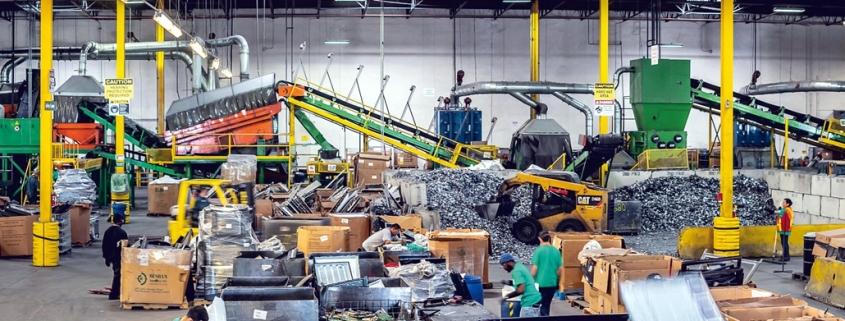
  3. Circular economy technologies for electronics recycling

What’s interesting is that buyers are no longer just acquiring revenue streams. They are increasingly focused on material sovereignty – securing control over critical inputs.


Q5. How has AI reshaped the depth and speed of due diligence, especially in assessing technology, data assets, and scalability?

From what I’ve seen, the traditional checklist approach to due diligence is no longer sufficient.

AI has fundamentally changed both the depth and speed of analysis. Instead of sampling a small portion of data, teams can now review entire codebases, contracts, and operational logs in a fraction of the time.

The discussion has shifted as well. It’s no longer just about whether the technology works. The more relevant question now is:

  • How much technical debt exists within the system?

Speed is becoming a differentiator. If a diligence process takes several weeks, there is a real risk that a more agile, AI-enabled competitor will move faster and close the opportunity.


Q6. How is sustainability influencing the way you frame deal theses, particularly in sectors like electronics, precious metals, and clean-tech?

In my experience, sustainability has moved from being a supporting narrative to becoming central to the investment thesis.

In sectors like electronics and precious metals, environmental performance is now directly tied to long-term value. I find myself looking not just at profitability, but at what sits behind it—carbon intensity, waste footprint, and long-term regulatory exposure.

There is also a practical consideration. Assets that are not aligned with sustainability expectations today may become difficult to exit in the future. In some cases, you are not just evaluating upside—you are assessing the risk of future obsolescence.


Q7. If you were an investor looking at companies within the space, what critical question would you pose to their senior management?

If I were evaluating a company, I would ask:

“If your largest customer disappeared tomorrow, what internal capability ensures you remain relevant within the next 12 months?”

In sectors like electronics and advanced materials, products evolve quickly. What tends to endure is the organisation’s ability to adapt.

If the answer is centered on brand alone, I would be cautious. If it points to strong R&D feedback loops or the ability to re-engineer and pivot quickly, that’s where I would pay closer attention.


Comments

No comments yet. Be the first to comment!

Newsletter

Stay on top of the latest Expert Network Industry Tips, Trends and Best Practices through Knowledge Ridge Blog.

Our Core Services

Explore our key offerings designed to help businesses connect with the right experts and achieve impactful outcomes.

Expert Calls

Get first-hand insights via phone consultations from our global expert network.

Read more →

B2B Expert Surveys

Understand customer preferences through custom questionnaires.

Read more →

Expert Term Engagements

Hire experts to guide you on critical projects or assignments.

Read more →

Executive/Board Placements

Let us find the ideal strategic hire for your leadership needs.

Read more →