
Evolution of Oil & Petrochemical Projects
Q1. Could you start by giving us a brief overview of your professional background, particularly focusing on your expertise in the industry?
Retired from HP Mittal Energy (HMEL) as Vice President Projects (30Nov2025), responsible for all Refinery & Petrochem major MOC & expansion projects at Bathinda.
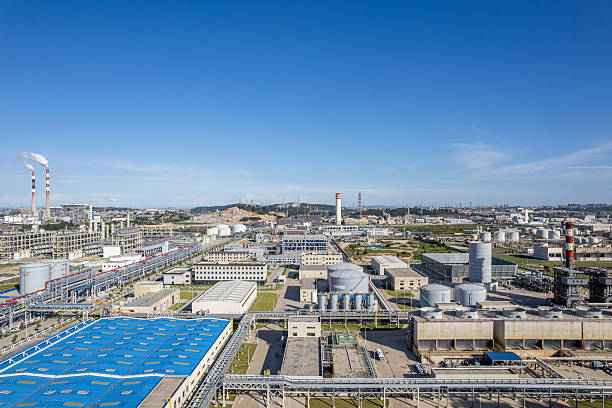
Oversaw the 1.2 MMTPA Dual Feed Cracker Unit. Completed construction & commissioning of one of the largest dual feed cracker units (Licensor-Lummus) in the world, constituting a major portion of the Rs. 25,000 crore Petrochemical Project.
I was with Kellogg Brown & Root, Engineering & Construction, India, in Chennai as a Senior Project Manager-Construction (2016-2017), responsible for Constructability studies at the Feasibility and Basic Engineering stages.
Was Head of Construction Department at AmecFoster Wheeler between 2011-2016 and responsible for Home Office Construction activities, including review and update of corporate procedures, proposals, construction planning, constructability studies, Technical Bid Evaluation, Construction HSE & Quality, staffing, budgeting, and Corporate governance.
Also held additional responsibility as Senior Resident Construction Manager for 15 months at Indian Oil Co. Ltd’s 15MMTPA greenfield refinery project at Paradip refinery, leading mechanical completion to commissioning.
Expertise in -
Diverse experience in management & leadership of multi-disciplinary, multi-national & culturally diverse teams to engineer, procure & construct oil refineries & petrochemical plants. Expertise in construction management, contract management (familiar with FIDIC and typical Indian Contracts, spanning the complete project cycle from FEED until commissioning and handover. Have executed projects from scope definition and bid package preparation, to estimation, to startup, cost-effectively and on schedule.
Background Work Summary
| Managing Construction Department | Construction Safety |
| Construction Management | Contract Management |
| Proposals preparation & evaluation | Pre-comm, Commissioning & Startup |
| Planning & Scheduling | Championing Lessons Learnt |
| Heavy Lifts & Rigging | Revamp, Tie-ins |
| Engineering Coordination | Constructability Studies |
Q2. How has the oil & gas and petrochemical project landscape evolved over the past few decades in terms of scale, complexity, and execution models?
Between the '80s and now, the projects have grown in size, complexity, reduced execution period, automation, and improvement in construction methodology, upward and downward integration, and, of course, the costs have gone up substantially.
Taking a topic at a time, let's talk about the size of the projects - earlier we used to have standalone refineries, but today we have refinery and petrochemical integrated, so as to maximize the value obtained from byproducts such as ethane, propane, etc. Today, we are able to handle low-grade crude, but as a consequence, we have to put additional process units or use costlier technology. The installation cost is higher, but we derive the benefits of scale and range of products. Environmental requirements have become more stringent and thus push the cost of the project.
As the size grows and also as the willingness to invest more for handling low-grade crude/optimization, the plant gets to become more complex - a measure of which is the Nelson index.
The execution model has also undergone change with more mechanization and automation. Modularisation is another example. Execution has adopted advances in technology, for example, in the inspection of weld joints, in semi-automatic and automatic welding, RFID, drone inspection, and the use of robots.
With the growth in complexity and size of the projects, the LSTK model has become more popular for project execution, shifting the risks from the owner to the contractor, but as a consequence, the project cost has jumped, and also restricted competition due to the limited availability of proven EPC contractors. EPC contractors are mandated to complete the huge projects in lesser time, at a lower cost, with greater safety and statutory compliance - leading to cutthroat competition, litigation, and delays.
Q3. What role do emerging markets play in shaping the next wave of refining and petrochemical investments?
The consumption and demand of petro products have undergone a shift, with the emerging economies becoming hungrier and also gradually developing production capability. The plants in the Western world are faced with several challenges, such as slump in local and export demand, capability of especially the developing countries to build their own plants and meet their own needs as well as also export, etc. Consequently, the petchem plants in Europe and the US face huge bottom-line pressures and have begun to sell or shut off their plants. However, they still hold the advantage in technology know-how. They have to move on to more niche technologies such as clean fuel and sustainable energy. The growth rate of emerging markets is significantly higher, pushing the West to strategically invest in and partner with these countries. The in-house capabilities have significantly increased. High growth, demand, availability of local talent, and a huge market have attracted the West to invest here.
Q4. How are sustainability considerations and decarbonization goals influencing project planning and execution in the oil & gas sector?
Governments in the emerging markets have shown a greater willingness to embrace sustainability and are actively engaging in framing policies that support sustainability. Our government has driven the PSUs to take up cleaner and alternative fuel, offering sops and facilitating in a big way. However, the ground reality of providing affordable energy to the masses is a continuous challenge. Cleaner fuels call for the adoption of higher and costlier technology. There are challenges at every stage - from the availability of technologies, production, distribution, and affordability. However, with the Government's strong push, there is a significant effort from the actors - oil companies, technology providers, investors, contractors, and consumers.
Q5. What underlying market dynamics are shaping competition among global and regional players in refining and petrochemicals?
Geopolitical developments, fluctuations in demand and supply of both raw materials and products, currency depreciation, government policies, environmental stipulations, natural disasters, and sanctions - all of them have a direct and immediate impact on the industry. The industry has become extremely cyclical with sudden dips and highs in profitability.
Q6. Which commonly emphasized purchasing criteria tend to be overrated, and which ones prove critical only during execution?
The avoidance of Chinese products was the norm previously, owing to perceived quality issues, as well as political imperatives. There is a total changeover these days in how Chinese products are viewed. Big companies such as Aramco and Sabic have moved away from "No Chinese make" compelled by their capability to deliver to specifications at a competitive price. Private companies in India routinely make their purchases from China. However, wherever the process licensor directs equipment purchase only from a limited list of vendors, that becomes binding. This is for fear of losing the licensor guarantees.
Q7. If you were an investor looking at companies within the space, what critical question would you pose to their senior management?
The obvious considerations would be Return on Investment, long-term demand, supply-side assurances, government policies and statutory requirements, Funding options, lower gestation period of projects, Geopolitical conditions, availability of local talent, labor, and materials.
Need an expert in this space?
Talk to an Industry Expert
Knowledge Ridge connects decision-makers with carefully vetted subject matter experts for one-on-one calls, research sprints, and advisory engagements — across 11 sectors and 163 sub-industries globally.
Comments
No comments yet. Be the first to comment!