
FMCG Sourcing in a Volatile Market
Q1. Could you start by giving us a brief overview of your professional background, particularly focusing on your expertise in the industry?
With close to nine years in the field, I've built my expertise in strategic sourcing, procurement, and outsourcing, working across FMCG, food manufacturing, semiconductor, and agribusiness sectors. Currently, at Magnum Ice Cream Company, I oversee global sourcing for outsourced business services. My responsibilities span procurement transformation, supplier governance, contract management, transition programs, and service delivery across various regions. I’m committed to driving operational efficiency, all while ensuring top-notch service quality and compliance.
Before this, I held global procurement positions at Bunge, where I managed indirect procurement categories and led supplier negotiations across different regions. Earlier in my career at Micron Technology, I supported procurement for semiconductor manufacturing projects, which gave me hands-on experience with complex supply chains, supplier qualification, and capital procurement. These experiences across different industries have given me a well-rounded understanding of supplier strategy, cost optimization, risk management, digital procurement, and how procurement operating models work in practice.
Q2. How are changing consumer expectations and market volatility influencing sourcing and outsourcing strategies across the FMCG industry?
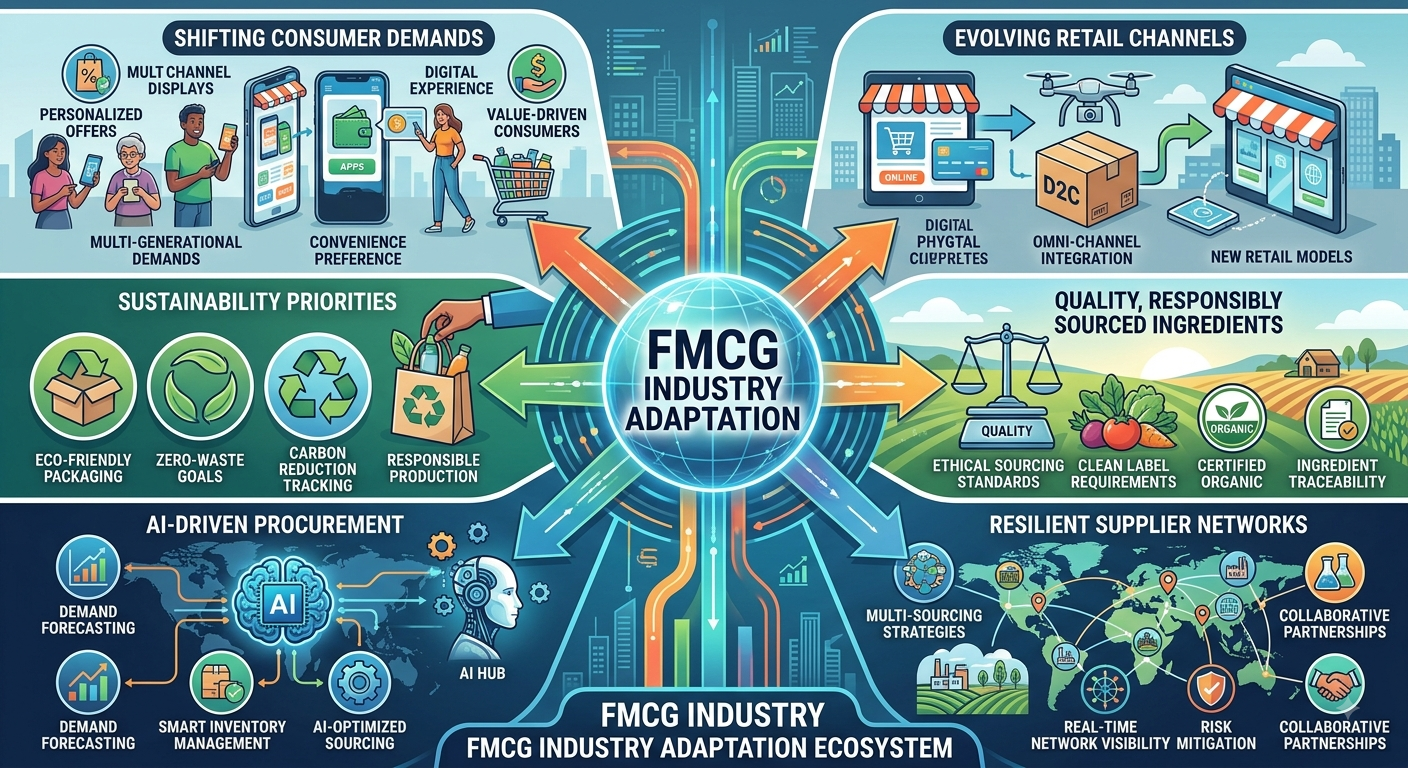
Today’s consumers are looking for more than just a good price or solid quality. They want products that are sustainable, transparent about their origins, readily available, innovative, and responsibly sourced.
At the same time, factors like geopolitical uncertainty, inflation, swings in commodity prices, and disruptions in logistics have made supply chains much more unpredictable.
Because of this, procurement teams are shifting their focus from simply cutting costs to building more resilient sourcing strategies.
Many companies are diversifying their supplier networks, sourcing regionally when it makes sense, building stronger supplier relationships, and creating backup plans for essential materials.
Outsourcing is also changing. There’s a growing preference for partners who can offer scalability, digital know-how, strong analytics, and a commitment to ongoing improvement—not just basic transactional support.
Procurement is working more closely with supply planning, operations, and commercial teams to respond faster to changes, while still balancing cost, service, and risk.
Q3. How are sustainability commitments influencing supplier selection and outsourcing decisions across the FMCG sector?
Sustainability is no longer just a nice-to-have—it’s now a key factor when evaluating suppliers. Procurement teams now look at much more than price or delivery times. They assess suppliers on things like environmental impact, ethical sourcing, efforts to reduce carbon emissions, responsible labor practices, traceability, and whether they meet all the necessary regulations—right alongside the usual commercial metrics.
Supplier scorecards now often include ESG (Environmental, Social, and Governance) measures, and companies are more likely to build long-term partnerships with suppliers who show strong sustainability performance—even if it means passing up short-term cost savings. Outsourcing partners are also expected to play their part: helping improve efficiency, cut waste, drive digital adoption, and report performance transparently.
From what I’ve seen, procurement decisions are now about creating lasting value, not just finding the lowest upfront cost. Sustainability is a big part of what makes businesses more resilient for the long run.
Q4. What role is AI expected to play in reshaping procurement, contract management, and supplier governance over the next few years?
AI is set to transform procurement by taking over repetitive tasks and helping teams make better decisions. When it comes to sourcing, AI can dig into spending patterns, spot potential savings, predict supply risks, and support the development of smarter category strategies. During sourcing events, it can speed up finding the right suppliers, gathering market insights, and evaluating bids. For contract management, AI makes things easier by automatically extracting key clauses, comparing contracts, tracking obligations, monitoring compliance, and managing renewals. This means less manual work and lower legal risks.
Supplier governance is also becoming more proactive. AI can pull together data on supplier performance, financial health, operations, and outside risk signals to spot problems before they affect the business. Instead of replacing procurement professionals, AI will free them up to focus on what matters most—building stronger supplier relationships, negotiating strategically, driving innovation, and creating value.
Q5. How are changes in retail channels influencing sourcing, supply chain, and operational strategies across the industry?
The world of retail is more fragmented than ever, with growth happening in e-commerce, quick commerce, modern retail, traditional shops, and direct-to-consumer channels. Each of these channels comes with its own set of service expectations, inventory needs, packaging styles, and restocking rhythms.
Because of this, companies need to be more flexible in how they source, manufacture, and move products. Procurement teams are teaming up more closely with commercial and supply chain colleagues to make sure suppliers can handle smaller production batches, deliver faster, offer tailored packaging, and react quickly to changing forecasts.
Digital demand signals and data analytics are now playing a bigger role in planning procurement. They help organizations keep up with changing consumer needs, cut down on excess inventory, and reduce waste.
Q6. How is the competitive landscape changing as access to high-quality ingredients and sustainable sourcing becomes increasingly important?
These days, competitive advantage is shaped more by the strength of a company’s supply chain than just its manufacturing capabilities. Businesses that build strong, strategic relationships with suppliers—and secure steady access to top-quality raw materials—are much better equipped to keep their products consistent, manage costs, and move faster on innovation.
Sustainability is also setting companies apart. Those that invest in responsible sourcing, supplier development, traceability, and open reporting are not only keeping up with regulations—they’re earning greater trust from consumers as well.
That’s why procurement is now seen as a strategic business driver—helping companies become more resilient, innovative, and focused on long-term value, instead of just handling transactions or chasing the lowest price.
Q7. If you were an investor looking at companies within the space, what critical question would you pose to their senior management?
I would ask:
"How resilient is your sourcing and supplier ecosystem, and what measurable competitive advantage does it provide during periods of market disruption?"
Specifically, I would want management to explain:
• How diversified their supplier base is for critical raw materials.
• Their dependence on single-source suppliers.
• How sustainability investments translate into commercial value.
• The maturity of their digital procurement and AI capabilities.
• Their supplier risk management framework.
• How procurement contributes to innovation, margin improvement, and long-term business resilience.
In today's FMCG environment, companies with resilient, digitally enabled, and sustainable procurement organizations are generally better positioned to protect profitability, maintain supply continuity, and support long-term growth despite ongoing market uncertainty.
Need an expert in this space?
Talk to an Industry Expert
Knowledge Ridge connects decision-makers with carefully vetted subject matter experts for one-on-one calls, research sprints, and advisory engagements — across 11 sectors and 163 sub-industries globally.
Comments
No comments yet. Be the first to comment!