
Future of Jewelry: Digital, Lab-Grown, & Agile Inventory
Q1. Could you start by giving us a brief overview of your professional background, particularly focusing on your expertise in the industry?
I work independently as a jewelry consultant, collaborating with manufacturers and retail brands throughout India. My main focus is on product strategy, inventory planning, and go-to-market execution. I help businesses shape their product assortments, develop smart pricing strategies, and optimize margins—particularly in fast-changing areas like Lab-Grown Diamonds (LGDs) and lightweight gold jewelry. Because I have insight into the entire value chain, I’m able to offer a commercially grounded perspective that balances design, market demand, and capital efficiency.
Q2. In your experience, how is the shift towards digital-first or hybrid retail impacting the capital lock-up in physical showroom stock?
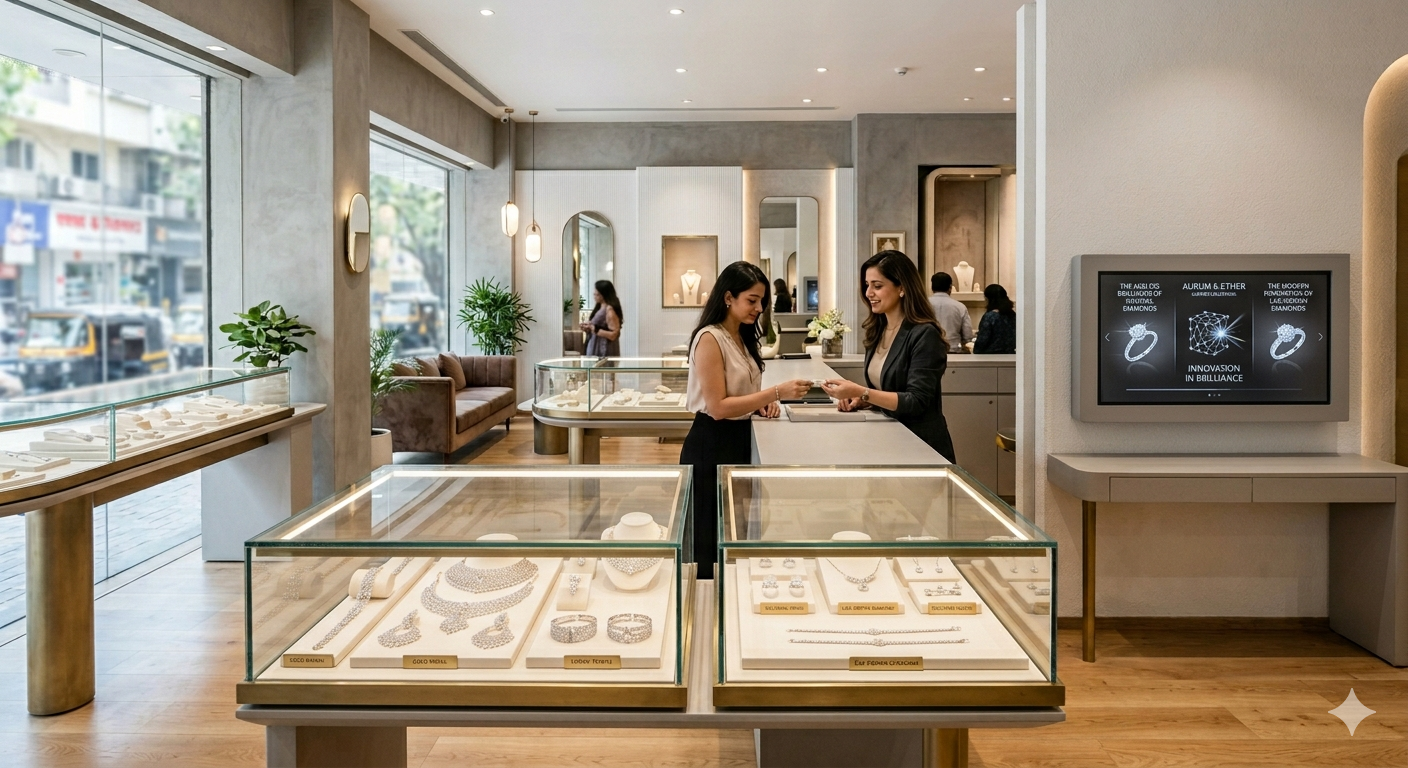
With the rise of digital-first and hybrid store models, retailers no longer need to keep as much inventory on the shop floor. More and more, stores are adopting a “display-led” approach—showcasing a curated selection of samples in-store, while relying on back-end inventory or making products on demand.
However, the reality is nuanced:
- For high-velocity SKUs (daily wear, studs, chains), physical stock is still critical
- For occasion or high-ticket pieces, digital catalogs and try-on models are replacing deep inventory
Capital lock-up is reducing per-store, but not necessarily per-business, because digital assortment breadth is increasing. The smarter players are reallocating capital from depth (stocking many pieces of the same SKU) to width (more designs, fewer units each).
Q3. How can companies protect unit margins as the price-per-carat for lab-grown stones continues to commoditize, and what percentage of their revenue is tied to 'fashion' LGDs versus 'high-margin' branded collections?
Digital-first and hybrid models are structurally reducing the need for heavy front-end inventory. Retailers are increasingly moving toward “display-led” formats, curated samples in-store, supported by backend inventory or on-demand manufacturing.
Key levers are:
- Design differentiation (non-generic silhouettes)
- Branding and storytelling
- Certifications, warranties, and perceived trust
- A memorable in-store experience and thoughtful packaging
Companies heavily exposed to “commodity LGD jewelry” (plain solitaires, basic tennis lines) are already seeing margin compression.
In most emerging Indian brands:
- ~60–80% of LGD revenue is currently from fashion-led, price-sensitive products
- ~20–40% comes from branded/high-margin collections
The long-term winners will deliberately shift this mix toward branded collections where pricing power exists.
Q4. With the rapid deflation in LGD raw material costs, how are firms managing the 'mark-to-market' risk of their existing diamond inventory?
This is one of the industry's biggest balance sheet risks today.
Companies are responding in three ways:
Faster Inventory Turns
Reducing holding periods aggressively (targeting <60–90 days for LGDs)
Dynamic Pricing
Passing on price drops quickly rather than protecting legacy margins, this avoids inventory becoming unsellable.
Inventory Light Models
- Memo-based sourcing
- Just-in-time manufacturing
- Vendor partnerships where risk is shared upstream
Firms still holding deep LGD inventory bought at older prices are either:
- Taking silent margin hits, OR
- Bundling products to mask pricing corrections
Q5. Given current gold price volatility, how are firms managing their inventory, and what is the ratio of 'old gold exchange' to 'fresh sales' in their current revenue mix?
Gold volatility has forced tighter working capital discipline.
Common strategies:
- Keeping less gold in stock by restocking more often instead of buying in bulk
- Relying more heavily on old gold exchange programs
- Using hedging strategies more selectively, especially among larger companies
On revenue mix:
- In many urban and semi-urban markets, the old gold exchange contributes 40–70% of transactions
- However, in value terms, fresh cash sales still dominate in premium segments
Old gold is no longer solely a promotional lever; it’s becoming a core sourcing mechanism for gold.
Q6. With 'old gold exchange' now accounting for up to 40–70% of transactions in some markets, how is this impacting the actual cash flow?
While it drives footfall and conversion, the old gold exchange substantially compresses cash inflows.
Implications:
- Lower immediate cash realization per transaction
- Increased dependency on making charges/design margins for profitability
- Gold procurement cost reduces, but liquidity tightens
Effectively, businesses are:
- Trading top-line growth for cash flow efficiency challenges
This makes working capital management and cost control far more critical than before.
Q7. If you were an investor looking at companies within the space, what critical question would you pose to their senior management?
I would ask: What percentage of your revenue is driven by true pricing power versus commodity-led sales—and how is that mix evolving?
This will help us understand:
- Brand strength
- Margin sustainability
- Exposure to price instability (gold/LGD)
- Long-term defensibility of the business
In today’s environment, companies that cannot clearly answer this question are likely operating on borrowed time when it comes to margin stability.
Need an expert in this space?
Talk to an Industry Expert
Knowledge Ridge connects decision-makers with carefully vetted subject matter experts for one-on-one calls, research sprints, and advisory engagements — across 11 sectors and 163 sub-industries globally.
Comments
No comments yet. Be the first to comment!