
Risk & ROI in Modern Energy Projects
Q1. Which roles most shaped how you assess technical and commercial risk in energy projects, and what scale of decisions were you accountable for?
During my 18-year career, the role that most shaped my understanding of technical and commercial risk was my tenure at Thermax as Group Head – Process & Proposal Engineering. I worked on customized biomass-fired boilers and heaters designed to meet client process requirements, fuel availability, budget, and performance expectations. The role involved evaluating technical feasibility, lifecycle performance, operating costs, and commercial competitiveness for diverse industrial projects. I was responsible for key decisions related to process design, equipment sizing, fuel efficiency, and proposal costing. This experience gave me strong exposure to balancing engineering reliability with practical commercial viability in energy projects.
Q2. Where have technologies like heat recovery or digital optimization delivered clear gains, and where do they fall short on ROI?
Technologies such as waste heat recovery and digital optimization have delivered strong gains in applications where sufficient temperature differential and stable operating conditions are available. In many industrial processes, they help reduce fuel consumption, improve energy efficiency, and support sustainability goals. However, in several cases, the actual commercial feasibility becomes challenging after detailed CAPEX and OPEX evaluation. A key limitation is the low approach temperature, which reduces heat transfer efficiency and increases the required heat exchanger surface area, making the system less economically attractive. In such situations, ROI may fall short despite technical feasibility. Nevertheless, projects driven by sustainability, decarbonization targets, or ESG commitments may still justify implementation even when financial payback is longer.
Q3. Where do ESG and decarbonization mandates start to materially impact project viability or margins, and how are leaders managing this?
ESG and decarbonization nowadays is not only a part of policy, but it is now part of the nisperate process and product. Now the push is from the client's side also.
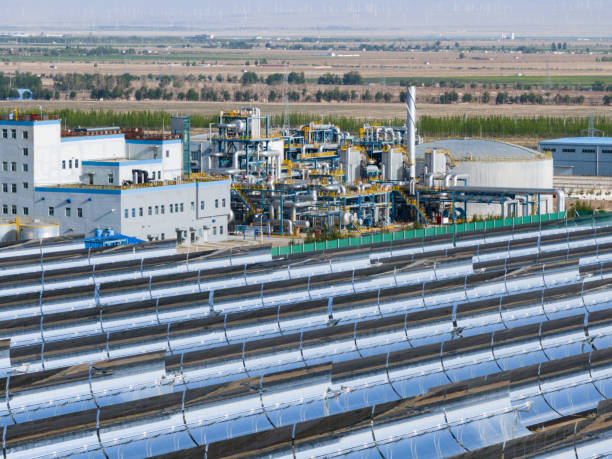
Now, renewable fuel costs are comparable to fossil fuels, and the renewable energy is giving lucrative payback. Solutions like Solar PV, Solar Thermal, and biomass are giving tough competition in projects to fossil fuels.
Now most corporate clients have a strong ESG goal implementation plan, which reflects the demand for products manufactured with renewable energy, as reflected in their tenders and RFQs.
At the same time, within renewable energy, different technologies pose their own challenges. Solar PV and Solar Thermal lack in energy storage as the costs are still high, Biomass as fuel has issues like fuel consistency, quality, and supply chain.
Leaders have to and are working to some extent to work on an optimum solution, like hybrid technology, with the least dependency on fossil fuel as a backup, and slowly shifting to renewable energy as the main energy source.
E.g., as a battery energy system is costly, a boiler can be used during the daytime on solar and the rest of the time on biomass or fossil fuel.
Solar Thermal boilers can be used during the daytime, and a backup boiler can be used at night.
Q4. When selecting boilers, heat exchangers, or fuel-handling systems, what criteria matter most beyond cost, and where do buyers typically misjudge?
Beyond cost (Capex) comes the technology and hence efficiency, which is reflected in opex, optimum automation, so as to handle the system with minimum manpower. Reliability of the manufacturer, which certainly comes with some premium, if we have to use such equipment for 20 years, this should be considered, after-sales service support.
Most of the buyers first think of cost alone; however, ideally, the above points shall be considered with suitable weightage, and e.g., a boiler with less capex with inefficient technology might cost less in capex, but the client might have to pay a higher amount on fuel and electricity.
Q5. Which industries are most actively investing in thermal efficiency or fuel transition, and what is driving their decision-making?
Most of the industries are on the path of fuel transition and efficiency, as per my opinion, fuel and pharma have more focus on these due to global compliances for MNCs and export opportunities (for pharma)
Q6. If you were allocating capital to energy transition projects today, what is one question you would ask project developers that is often overlooked, and what kind of answer would raise a red flag for you?
Typically, project projection is done on theoretical values of performance (e.g., efficiency as per BS 845 part 1) In real life, the values are different, so my question will be
Have you considered real-time parameters while calculating payback/operational costs, with some margin to account for actual inefficiencies and their trend over the life of the equipment??
The red flags –
- Consideration of theoretical/best efficiency/ parameters
- Ignoring real-time scenarios such as variation in parameters over time (e.g., change of moisture due to season, degradation of efficiency over a time period, fouling of the boiler)
Need an expert in this space?
Talk to an Industry Expert
Knowledge Ridge connects decision-makers with carefully vetted subject matter experts for one-on-one calls, research sprints, and advisory engagements — across 11 sectors and 163 sub-industries globally.
Comments
No comments yet. Be the first to comment!