
AI’s Impact on Cloud Consulting and Data Center Economics
Q1. Could you start by giving us a brief overview of your professional background, particularly focusing on your expertise in the industry?
For over four decades, I’ve worked at the intersection of IT, cloud, digital infrastructure, and business transformation. My journey has taken me through executive leadership, full P&L responsibility, strategic advisory roles, and hands-on operational delivery.
As the former CEO of CtrlS Datacentres and NetDataVault, I oversaw the creation of new data centres from the ground up, shaped go-to-market strategies, and managed P&L for Tier-3/4 facilities, cloud platforms, and managed IT services.
While at IBM India as a Client Partner Executive, I handled major infrastructure outsourcing projects—including what was then the largest cloud deal in Asia Pacific—along with SAP HANA migrations and big network transformation initiatives using SDN, IoT, and wireless technology.
Today, as Chief Strategy Officer at YenDigital, I focus on enterprise technology strategy, AI, cloud, data, and digital transformation. Earlier, as Global Strategy Principal at CloudPrisma, I worked on cloud and emerging-technology adoption.
My earlier leadership roles at Bharti Airtel and Tata Internet/VSNL also gave me broad exposure to telecom, enterprise, and technology infrastructure.
My experience covers the complete infrastructure lifecycle—from building and operating data centres, to migrating enterprise workloads, and now helping businesses determine where AI and cloud investments can deliver measurable business value.
Q2. How has enterprise budget allocation shifted between foundational cloud migration and native generative AI deployment over the past 12 months?
In the last year, Indian businesses have stopped seeing the cloud as just a place to move their systems—they now treat it as the core platform powering AI and data-driven insights.
The early days of cloud were all about lift-and-shift migrations. Now, that stage is winding down, and new investments are focused on GPU-powered computing, faster networks, modern data platforms, PaaS offerings, and ways to orchestrate AI models.
At the same time, companies are moving generative AI out of the lab and into real-world use. Budgets are moving away from isolated experiments and toward practical solutions—like domain-specific models, copilots, smart agents, and AI that's directly built into daily business operations.
CFOs are also keeping a closer eye on spending. Instead of building everything from scratch, more companies now prefer to buy and integrate ready-made solutions from hyperscalers, SaaS providers, system integrators, and AI specialists.
For example, instead of just moving a customer service app to the cloud, a business might now invest in better data platforms, use vector search, connect large language models, and deploy AI agents to automate the entire customer service process.
As a result, the big opportunity is moving away from simple migration projects toward higher-value work—like data engineering, building AI infrastructure, optimizing cloud costs, and weaving AI into business workflows.
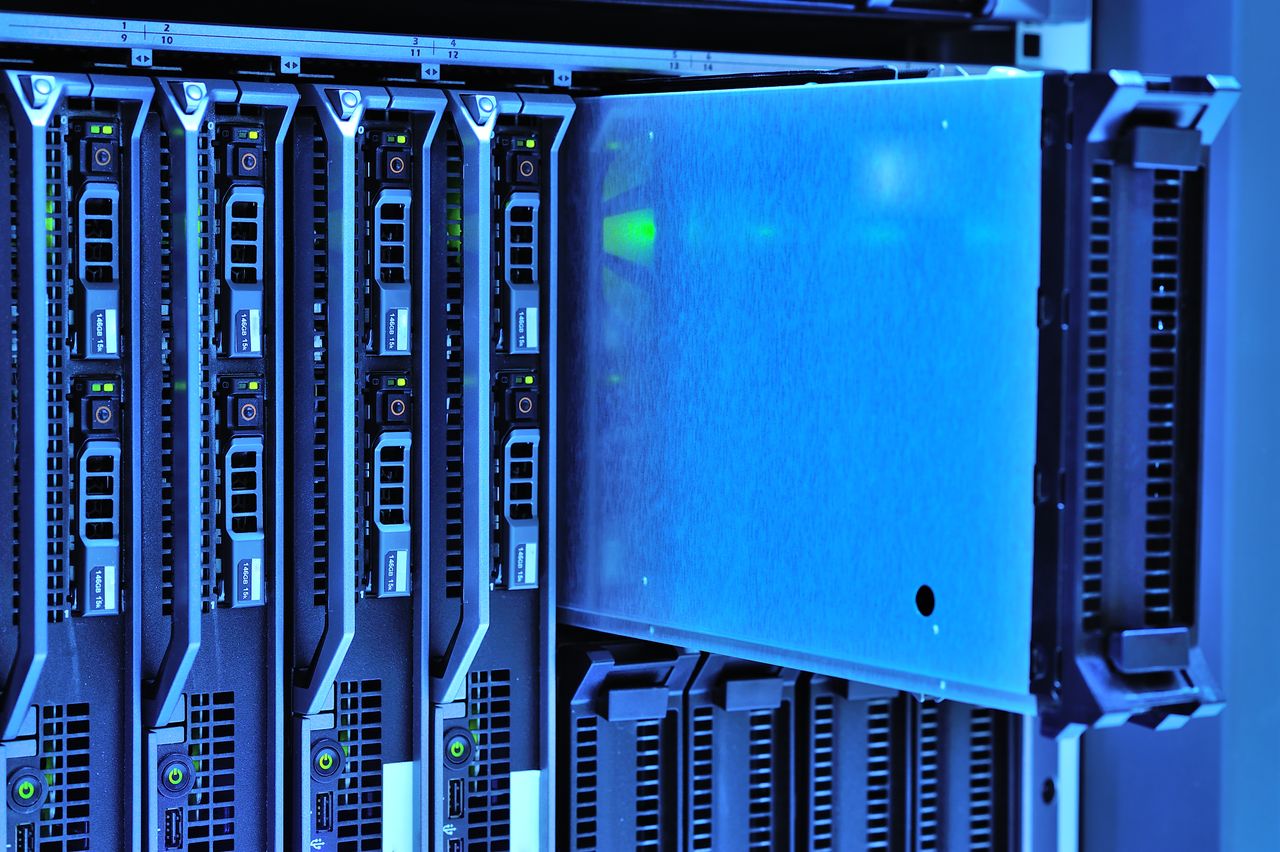
Q3. In managing large-scale data centre operations, what structural strategies are most effective in mitigating soaring power demands and cooling costs for AI workloads?
AI is completely reshaping how data centres operate. Where racks used to average 8–15 kW, they’re now hitting 50–100 kW or more. That means getting enough power and keeping things cool have become big challenges for capacity and profitability.
I see four priorities:
Liquid cooling: For high-density AI setups, traditional air cooling just doesn’t cut it anymore. Direct-to-chip and immersion cooling are quickly becoming must-haves.
Secured power: Because the grid is crowded and utility connections can take ages, operators are finding workarounds—like building data centres close to dedicated, cleaner power sources. These might be solar with battery storage, gas turbines, or even upcoming small nuclear reactors.
Intelligent workload management: Cooling and power systems need to react in real time to how much computing is happening. For example, less urgent AI training jobs can be delayed or slowed down when energy use is peaking.
Efficient power distribution: Using higher voltages and cutting down on energy lost during conversion helps data centres run more efficiently overall.
For example, a data centre built for 80–100 kW racks can’t just keep adding more regular air conditioning. Whether it’s profitable now depends on if it was built or upgraded for liquid cooling, and if it has enough power locked in.
When evaluating these facilities, it’s important to look beyond just PUE. You need to consider how ready they are for liquid cooling, whether they have access to enough power, what the energy tariffs are, and how easily they can expand.
Q4. Where do you see the highest valuation discrepancies between private equity expectations and the actual revenue growth rates of mid-sized cloud consulting startups?
The biggest gap I see is that a lot of mid-sized cloud consultancies are being valued like SaaS companies, even though their business models are still rooted in people-driven professional services.
Four areas create the greatest gap:
SaaS multiples applied to services revenue: If a consultancy doesn’t have proprietary IP that brings in steady license fees, its growth is still tied to hiring more people, keeping them busy, and finding the right talent.
Customer concentration: A consultancy might show 25–30% annual growth, but if nearly half its revenue depends on just a few big projects, things can change fast when those projects wrap up.
AI-margin assumptions: AI services are in high demand, but with skilled AI, data, and cloud experts in short supply, the cost of delivery goes up and margins get squeezed.
Hyperscaler rebates: Cloud resale incentives might look good on paper, but partner programs and rebates can change, which can suddenly reveal the true economics underneath.
For instance, a consultancy might report 30% revenue growth after landing a big cloud migration project. But if that project ends and there’s nothing similar in the pipeline—or if they can’t convert that work into ongoing managed services—the next year’s growth can quickly disappear.
So, it’s important to look beyond headline revenue growth. Focus on things like net revenue retention, recurring managed services, utilization rates, profit per employee, and real proprietary IP.
Q5. Looking ahead, what key takeaway would you like to give the tech investors and the digital transformation and AI infrastructure players today and why?
My key takeaway is that the market is moving from the “Infrastructure Expansion Phase” of Cloud and AI into the “Unit Economics and ROI Realization Phase.”
Over the next decade, premium valuations will increasingly go to companies that can demonstrate three things: efficient infrastructure, trusted data, and measurable business outcomes.
First, power and thermal efficiency are becoming infrastructure moats. Data centre value will increasingly depend on access to power, liquid-cooling capability, and the ability to operate high-density workloads efficiently.
Second, enterprises are moving from “compute acquisition” to FinOps and ROI discipline. Providers that help customers optimize cloud and AI costs, not simply sell more capacity, will build stronger retention.
Third, AI models themselves are becoming increasingly commoditized. Defensible value will reside in proprietary enterprise data, secure data pipelines, and domain-specific workflows.
Example: A company that deploys an AI platform but cannot prove reduced service costs, faster processing, or higher revenue will struggle to sustain premium economics. Conversely, an AI provider that can show measurable savings or productivity gains creates a much stronger investment proposition.
Investors should look beyond AI growth headlines and underwrite durable margins, efficient infrastructure, data readiness, and measurable ROI.
Need an expert in this space?
Talk to an Industry Expert
Knowledge Ridge connects decision-makers with carefully vetted subject matter experts for one-on-one calls, research sprints, and advisory engagements — across 11 sectors and 163 sub-industries globally.
Comments
No comments yet. Be the first to comment!