Future-Proofing with Deterministic AI
Q1. Could you start by giving us a brief overview of your professional background, particularly focusing on your expertise in the industry?
I do not look at AI as a software feature or a statistical optimization tool. I look at it through the lens of thermodynamics and structural mathematics: how do we compress chaotic, high-entropy enterprise data into low-entropy, high-certainty operational actions?
Throughout my career spanning quantitative finance and global supply chains, my focus has been on ruthlessly eliminating the execution gap between probabilistic modeling and deterministic P&L impact. Most recently, as a Senior Data Science Manager, I led global AI transformations that moved past the industry's obsession with "pilot projects." My team built and scaled zero-shot, transformer-based platforms integrated directly into global enterprise pipelines. Instead of merely predicting numbers for a dashboard, these systems automated high-stakes procurement decisions, unlocking a £2.5M+ revenue uplift and cutting stockouts by 20% across 30+ international markets.
My unique vantage point is that most organizations are doing AI completely wrong. They apply brute-force computing to messy data and expect intelligence. My approach relies on first principles: using classical math and causal inference to build rigid, deterministic decision layers that make AI safe and highly profitable in volatile, real-world environments.
Q2. With enterprise data centers facing massive energy constraints and skyrocketing hyperscaler GPU compute fees, what is the practical timeline for shifting massive Transformer-based supply chain forecasting models from heavy cloud-based environments down to localized?
The current narrative says we will move models to the edge because GPUs are expensive. The contrarian reality is that we will move models to the edge because the cloud violates the basic physics of speed and security required for autonomous operations. The practical timeline for this architectural inversion is 3 to 5 years.
Relying on a centralized cloud for real-time enterprise decisions is like an organism sending its sensory data back to a distant, collective brain just to decide whether to take a step. It creates an unsustainable latency and an unacceptable single point of failure. The transition down to localized silicon will not just be about cheaper compute; it will be driven by a radical shift in model architecture:
The Death of Monolithic Inference: We will stop running 70B+ parameter models for simple operational tasks. Instead, we will use extreme quantization (down to 2-bit structural math) to freeze foundational weights into localized, application-specific hardware.
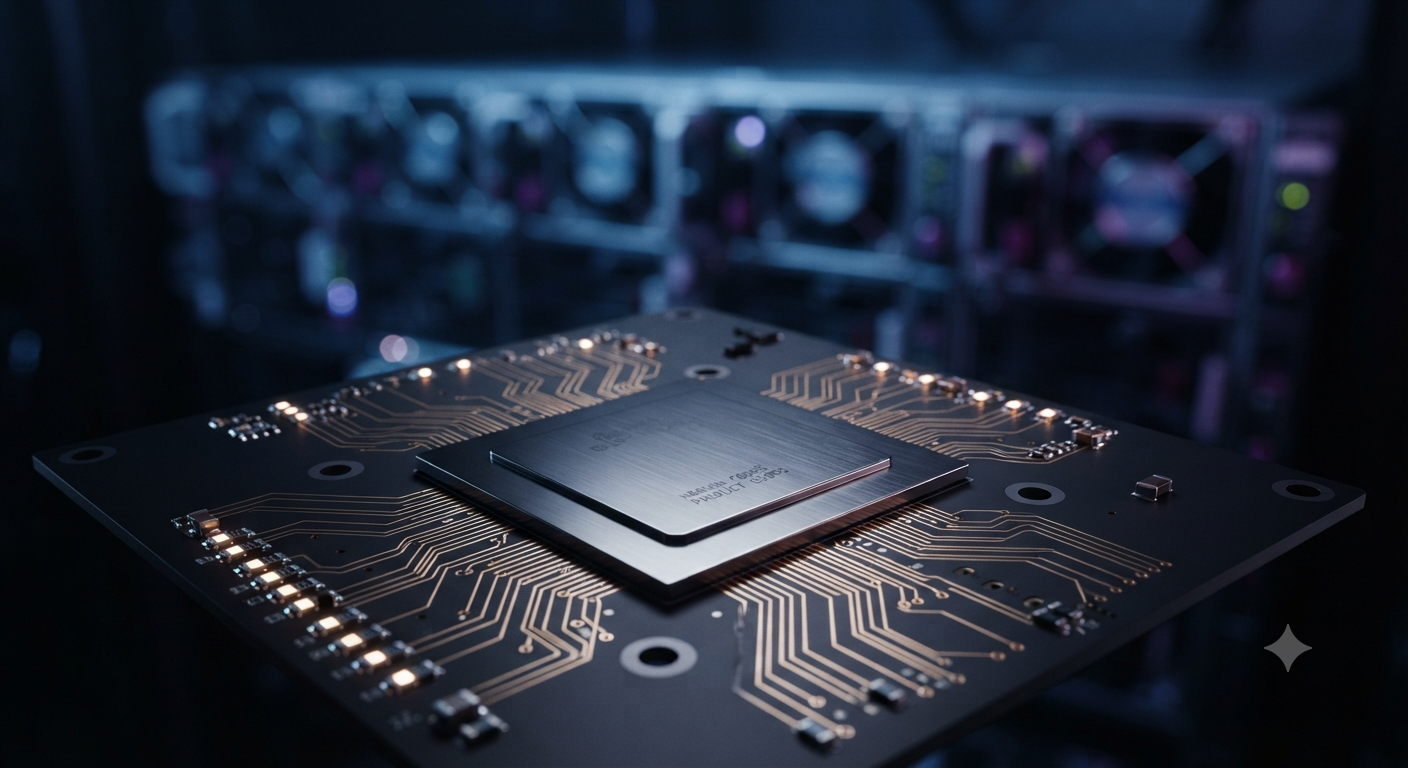
Silicon Real Estate: Next-generation on-premise infrastructure will feature hyper-specialized Neural Processing Units (NPUs) built solely for low-power matrix math, completely bypassing traditional hyperscaler tax.
By 2029, the cloud will be reduced to a background mechanism—used strictly for asynchronous, global base training—while real-time operational execution happens locally, running on-premises at near-zero incremental cost.
Q3. As enterprise tech transitions from bespoke, market-specific ML models to large-scale, zero-shot foundation models for time-series forecasting, will this trend completely commoditize niche AI software startups and concentrate enterprise pricing power into the hands of a few tech hyperscalers?
The standard belief is that hyperscalers will commoditize everyone. The contrarian truth is that hyperscalers are building the highways, but they have no idea how to build the vehicles that actually move the specific cargo. Zero-shot foundation models will absolutely obliterate niche startups that act as simple middleware wrappers around generic APIs. If your startup's core IP can be replaced by a system prompt update from OpenAI or Google, your enterprise value is exactly zero. However, this concentrates pricing power only at the raw infra layer.
The real enterprise value is shifting entirely away from the model and moving toward Context Physics and State Orchestration:
Context Ingestion: The foundational model is blind without a highly structured, layout-aware data pipeline (like dense-sparse fusion) that accurately translates complex, messy corporate reality into vector space.
Deterministic Execution State: A foundation model gives a probabilistic guess. The value lies in engineering cyclic, self-correcting multi-agent state machines (via LangGraph) that act as an unyielding container, capturing and correcting those guesses before they can manifest as catastrophic operational actions.
Hyperscalers will own the commoditized mathematical raw material, but the firms that command the deterministic decision architectures on top will dictate the actual business terms.
Q4. What are the structural limitations of legacy systems that prevent them from matching the ROI of custom AI layers, and does this threaten the recurring revenue models of traditional SaaS providers?
Traditional SaaS providers are facing an existential crisis because their core business model is built on charging enterprises to store data in digital file cabinets, whereas modern value requires treating data as a fluid, high-velocity, kinetic asset.
Legacy architectures are structurally crippled by relational databases and rigid, static schemas designed decades ago for passive record-keeping. When these legacy systems try to handle modern forecasting, they force a high-dimensional, chaotic economic reality into flat, linear time-series buckets. They completely ignore non-linear external shocks, text-based market intelligence, and complex causal dependencies. To survive, traditional SaaS providers are trying to "bolt on" generic AI modules as marketing theater.
This approach is fundamentally flawed. It introduces massive data latency and fails to capture the unique, cross-functional realities of a complex enterprise. Forward-thinking organizations are realizing that paying exorbitant recurring licensing fees for rigid software middlemen is bad math. The highly disruptive, high-ROI move is to build lean, custom AI decision layers directly atop raw cloud data warehouses, effectively bypassing traditional SaaS providers entirely.
Q5. At enterprise scale, do the efficiency gains of automated scenario simulation genuinely outpace the long-term API and infrastructure maintenance costs?
At enterprise scale, the raw efficiency gains of automated scenario simulation completely eclipse infrastructure maintenance costs—but only if you abandon the naive approach of using heavy, probabilistic LLMs to do basic math.
If an enterprise builds an unconstrained system that queries commercial LLM APIs for every minor operational permutation, the token overhead and infrastructure maintenance will rapidly bankrupt the project's ROI. The contrarian architectural solution requires separating computation from cognition:
Parametric Math Core: Use highly optimized, classical parametric algorithms to handle millions of combinatorial matrix calculations instantly and at zero variable cost.
Cognitive Orchestration Layer: Deploy LLM agents hyper-selectively, utilizing them solely to interpret unstructured constraints (e.g., assessing a sudden geopolitical event or reading a regulatory text) and to synthesize the final strategic outputs.
By enforcing strict state-condensation guardrails, caching historical simulations, and moving toward self-hosted, open-source models, you decouple simulation scale from compute cost. Optimized this way, you gain the ultimate competitive advantage: the ability to mathematically stress-test an entire global enterprise thousands of times per second for pennies on the dollar.
Q6. When using Agentic systems for planning automation and scenario simulation, which governance frameworks prevent AI from introducing hallucinated inventory procurement decisions, and who bears the financial liability?
The current industry conversation revolves around "reducing" AI hallucinations. My position is uncompromising: In an automated enterprise pipeline, the acceptable tolerance for an unguided AI hallucination is exactly zero. Treating a probabilistic model as an autonomous decision-maker without rigid, deterministic boundaries is operational negligence.
To achieve zero-defect automation, we must build a governance framework that treats the AI state machine as a highly restricted environment. This requires embedding runtime state validation guardrails and custom reducers directly into the agentic code loop. The system must be governed by immutable, hardcoded physics: if an agent's proposed procurement action violates historical variance thresholds, structural budget constraints, or causal logic, the execution state is immediately halted and forced into an automated human-in-the-loop escalation pipeline.
Regarding liability: legal accountability cannot be outsourced to a software vendor or an API provider. The financial liability rests 100% on the deploying enterprise. Because model creators protect themselves with sweeping software disclaimers, the organization must mitigate this risk by treating the AI output not as a command, but as a hypothesis that must pass multiple levels of automated, deterministic validation before a single dollar is spent.
Q7. If you were an investor looking at companies within the space, what critical question would you pose to their senior management?
If I were an investor analyzing the enterprise AI space today, I would completely ignore standard metrics like user growth or ARR, which can easily be inflated by marketing spend. Instead, I would look senior management in the eye and ask this core question:
Can you mathematically demonstrate how your system transitions from a probabilistic prediction to a deterministic action, and exactly what is the structural decay rate of your platform's economic moat when your foundational model tier inevitably becomes a free, commoditized utility?
Most companies can show a dazzling prototype that achieves an impressive error rate on clean, historical datasets. That is trivial. The ultimate test of an enterprise software asset is its resilience to reality: how it handles data drift, how it prevents hallucinations from disrupting production workflows without requiring an army of human auditors, and whether its architecture can scale infinitely without a linear explosion in cloud compute costs. If management cannot map out their structural math and guardrail architecture, they are scaling an expensive liability rather than an asset.
Need an expert in this space?
Talk to an Industry Expert
Knowledge Ridge connects decision-makers with carefully vetted subject matter experts for one-on-one calls, research sprints, and advisory engagements — across 11 sectors and 163 sub-industries globally.
Comments
No comments yet. Be the first to comment!