Knowledge Ridge

Future Trends in Commercial Vehicles

Future Trends in Commercial Vehicles

June 2, 2026 7 min read Energy
Future Trends in Commercial Vehicles

Q1. Could you start by giving us a brief overview of your professional background, particularly focusing on your expertise in the industry?

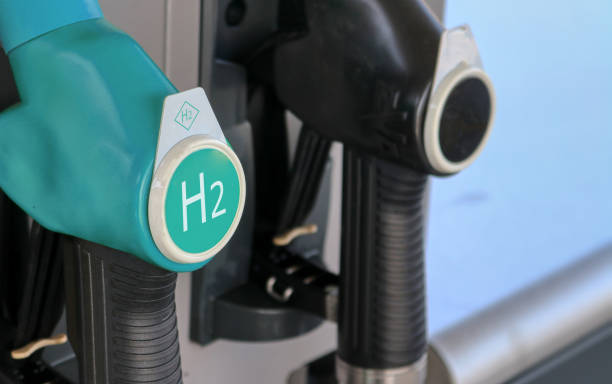
I am Samarth Jain, an automotive engineering professional driving technology programs with Bosch. With 15+ years of experience in powertrain development, calibration, vehicle integration, and technical leadership within the commercial vehicle industry , I am currently taking care of project management for the H2 Internal combustion engine for Commercial vehicle applications. 
Over the years, I have worked closely with global engineering teams in Germany and China, managing complex development programs across the complete V-cycle. My experience combines strong technical depth with stakeholder management, strategic execution, and team leadership.  


Q2. How is the evolving mix between diesel, electrification, and emerging options like hydrogen ICE shaping development priorities in the commercial vehicle segment?

The commercial vehicle industry is moving toward a multi-powertrain ecosystem where customers can choose between diesel, electric, and emerging hydrogen-based solutions depending on application and operational needs.

Diesel continues to dominate heavy-duty and long-haul applications due to its maturity and infrastructure, while electrification is growing rapidly in urban and short-range segments. At the same time, Hydrogen ICE is emerging as a promising solution for future heavy-duty mobility.

As a result, development priorities are shifting toward flexible vehicle platforms, scalable control systems, software integration, and efficient calibration strategies that can support multiple powertrain technologies within the same product ecosystem.


Q3. What longer-term shifts do tightening emission norms tend to trigger in calibration strategies and system integration approaches?

Over the years, tightening emission norms have continuously driven major changes in calibration strategies and system integration approaches.

Earlier regulations focused heavily on reducing NOx emissions, which led to the introduction of technologies such as urea dosing systems, Selective Catalytic Reduction (SCR), and ammonia slip catalysts, along with increasingly complex calibration requirements.

The next major focus is CO2 reduction and overall efficiency improvement. This is driving further optimization of combustion, fuel efficiency, thermal management, and integration of electrification features such as regenerative braking and hybrid systems using Li-ion battery packs alongside diesel engines.

Going forward, OEMs will increasingly adopt multi-powertrain strategies, including hybrid and fully electric vehicles, requiring much deeper integration between mechanical, electrical, software, and energy management systems to meet future emission targets.


Q4. What trends are you seeing in how global platforms are being adapted for region-specific requirements?

Global vehicle platforms are increasingly being designed with flexibility to adapt to region-specific requirements, regulations, infrastructure, and customer usage patterns.

For example, in markets like India, there is a growing focus on electrification, Hydrogen ICE, and ethanol-based vehicles driven by local emission targets, energy diversification, and operating conditions. In contrast, regions such as Japan and parts of China are investing more  in fuel-cell technologies and advanced electrified mobility solutions.

As a result, global OEMs are adopting modular and scalable platform strategies that allow faster adaptation of powertrain technologies, calibration, and system integration to meet specific regional market demands.


Q5. How is the increasing use of simulation, digital twins, and virtual validation changing the traditional V-cycle development process?

The increasing use of simulation, digital twins, and virtual validation is significantly transforming the traditional V-cycle development process by enabling faster and more efficient development cycles.

Simulation models are now providing highly realistic results, allowing many validation and verification activities to be completed virtually before physical testing. The closed-loop interaction between simulation and real-world data is improving both functional performance and component optimization.

As a result, development teams can identify issues earlier, reduce dependency on prototype testing, shorten development timelines, and significantly optimize overall testing cost and effort while improving product quality and robustness.


Q6. How might alternative fuels and evolving use cases in commercial vehicles open up new development or optimization opportunities?

Alternative fuels and evolving commercial vehicle use cases are creating entirely new opportunities for product development and system optimization across the industry.

We are seeing clear segmentation of applications — electric commercial vehicles for urban and city operations, alternative fuel or hydrogen-based solutions for long-haul highway usage, and hybrid or intermediate solutions for intercity applications.

In addition, entirely new vehicle categories and business models are expected to emerge based on range, payload, charging infrastructure, and operating requirements. This could include dedicated urban EV fleets, hydrogen-powered heavy-duty transport corridors, smart connected logistics vehicles, and specialized regional mobility solutions.

This transition is driving significant development opportunities in areas such as powertrain integration, energy management, thermal systems, charging and fueling strategies, software controls, calibration optimization, and vehicle connectivity. Overall, the industry is moving toward more application-specific, energy-efficient, and technology-driven mobility ecosystems.


Q7. If you were an investor looking at companies within the space, what critical question would you pose to their senior management?

If I were an investor evaluating companies in this space, one of the key questions I would ask senior management is how well they understand evolving customer needs and how effectively they are converting the voice of the customer into future-ready products and mobility solutions.

I would also focus on their long-term strategic roadmap for emerging technologies such as Hydrogen ICE and alternative fuels. Success in these areas will depend not only on vehicle development but also on building the broader ecosystem involving infrastructure providers, suppliers, energy companies, and regulatory bodies.

Another critical aspect would be understanding how the company plans to collaborate across the industry to scale these technologies commercially while maintaining competitiveness, sustainability, and profitability.


Comments

No comments yet. Be the first to comment!

Newsletter

Stay on top of the latest Expert Network Industry Tips, Trends and Best Practices through Knowledge Ridge Blog.

Our Core Services

Explore our key offerings designed to help businesses connect with the right experts and achieve impactful outcomes.

Expert Calls

Get first-hand insights via phone consultations from our global expert network.

Read more →

B2B Expert Surveys

Understand customer preferences through custom questionnaires.

Read more →

Expert Term Engagements

Hire experts to guide you on critical projects or assignments.

Read more →

Executive/Board Placements

Let us find the ideal strategic hire for your leadership needs.

Read more →