India's Power Transition and RE Growth
Q1. Could you start by giving us a brief overview of your professional background, particularly focusing on your expertise in the industry?
I am an energy sector expert and have worked at NTPC Ltd. for more than 38 years in various functions (Project Management, Operations, Corporate Planning, Technical Services, Procurement, and Consultancy). I also specialize in Business Excellence and TQM. During these four decades of work experience, I have managed coal, gas, and solar energy plants at the leadership level. I am a postgraduate in Engineering and Management and hold a doctorate in General Management. I developed the Business Excellence Model for the power sector based on the EFQM Business Excellence Model. I am the author of a customized model called the NTPC Business Excellence Model for evaluating the performance and sustainability of power plants. I am currently available for consulting in the energy domain, project management, and corporate leadership training.
Q2. What structural changes are having the greatest impact on India’s power sector today, and how are they reshaping investment priorities across the industry?
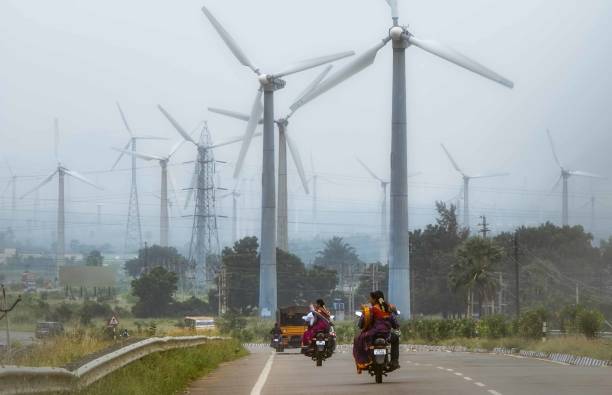
India is in an energy transition phase from fossil fuel-generated power to renewable energy (RE), especially solar. The transition is being driven in a coordinated and aggressive manner by the government. Energy requirements and carbon neutrality are being integrated at the policy level. As of 30.04.26, the total installed capacity of the country is 537 GW, out of which non-fossil fuel sources (solar, wind, hydro, nuclear, etc.) contribute 54%. India’s renewable energy (RE) capacity addition plan is anchored by a target of achieving 500 GW of non-fossil fuel energy capacity by 2030. India has already reached over 288 GW of installed non-fossil capacity, representing over 50% of its total electricity generation mix. However, baseload providers are still coal-based thermal power plants, and after sunset, it is essentially thermal plants that energize the country. This is the reason for significant coal generation capacity addition as well, of course, with efficient 800 MW unit sizes. India added 9.47 GW of thermal (primarily coal and lignite) capacity in FY 2025–26 (major OEMs BHEL and L&T’s order books for 800 MW and 660 MW units are full for the next five years). Nevertheless, RE capacity addition growth over the last two financial years has been above 15% on a yearly basis, whereas thermal growth is negative. Just to put things in perspective, we have to run thermal plants above technical minimum capacity, consumers have to bear the fixed cost of thermal power, and at the same time, RE development charges as levelized tariffs. During this transition phase, both thermal plants and solar plants are facing the challenge of load volatility. In the case of solar, inadequacy of transmission line infrastructure and, many times, load curtailment are challenges. Various projections and studies have indicated that thermal power will remain relevant for at least the next two decades, and the transition will take another 8–10 years.
Q3. Where do you see the most attractive growth opportunities emerging within the renewable energy value chain over the next five years?
Government-supported solar projects must use domestically produced solar cells in compliance with ALMM II, and the implementation date is June 1, 2026. This offers an opportunity, especially for larger manufacturers, to enhance capacity for these projects. India’s total ALMM List-II enrolled solar cell manufacturing capacity effectively stands at approximately 20 GW. With the PLI scheme and growing demand, it will grow to 80 GW by 2030. With the rapid expansion of data centres and AI, managing the intermittency of solar and wind is a multi-billion-dollar priority. Pairing renewable generation with BESS allows electricity to be stored and dispatched during peak hours. BESS and the ecosystem around batteries are potential opportunities that have already started unfolding. Transmission infrastructure, power transformers, inverter transformers, and 6.6 kV cables are equipment categories for which the supply chain is strained, and capacity addition offers great opportunities. Last but not least, experienced manpower required in the solar sector is another area of opportunity with respect to employment and good remuneration. Land aggregation and trading of connectivity with GSS are also potential non-technical areas of opportunity.
Q4. How is competition evolving between public-sector players, private developers, and new entrants across the renewable energy ecosystem?
There are established players in both the public and private sectors. Public-sector and government-owned companies are under a mandate to have renewable energy in their overall energy portfolio, and cash-rich companies have been targeted. As a result, many Maharatna and Miniratna CPSUs have entered the solar field with impressive capacity build-up. They already possess an experienced and talented manpower pool available at various managerial levels and have an office presence across India. Additionally, these CPSUs are forming JVs with state government renewable departments and setting up large capacities. This approach by the government is quite successful because, being government entities, they are able to source land relatively easily, obtain administrative support, access a large vendor base, follow time-tested systems and procedures, secure government approvals, and gain support from the local public. Hence, in renewable energy, public-sector companies are giving strong competition to private players. In the private sector, Adani, Tata, Reliance, ReNew, Waaree, and Vikram Solar are among the major players. New entrants are setting up smaller capacities and moving cautiously. As such, this landscape is getting filled at a fast pace, mostly with large giants like NTPC, Adani, Tata, and Reliance.
Q5. Which sustainability metrics do you believe will become increasingly important for evaluating the long-term strength of power and renewable energy companies?
The power sector is capital-intensive, and an industry where the product cannot be stored or kept in a warehouse; therefore, sustainability metrics for long-term evaluation remain similar to those used until now. The very first pillar is revenue visibility, which in turn relates to PPAs and payment security mechanisms. This makes it very prudent to know who is buying this power; state-backed utilities, government entities, data centers, and railways are safe purchasers for predicting cash flows. Then comes the energy company’s execution efficiency in completing projects on time and the operational efficiency of the plant. Instead of relying solely on supply to the grid, stronger companies can diversify by manufacturing equipment (e.g., solar modules or wind turbines), providing engineering, procurement, and construction (EPC) services, or managing battery energy storage systems (BESS) and hydrogen projects. ESG ratings can serve as a proxy for regulatory compliance and long-term vision. A strong ROCE above 12% proves that invested capital is generating adequate profits. There are metrics available to evaluate long-term O&M capabilities and performance, which normally include generation, forced outages, planned outages, generation lost due to internal factors, plant load factor, capacity utilization factor, plant availability, fuel tie-up, fuel security, planned outages and annual overhauls, environmental parameters and compliance, safety standards and fire records, spare parts sourcing and vendor development, employee-related parameters, CSR work, insurance claims, and so on.
Q6. Where is AI creating the greatest decision-making advantage across the power and renewable energy value chain today?
AI, per se, is at a nascent stage of deployment in power plants, although power plants have been using state-of-the-art control and monitoring systems since the beginning. AI applications include predicting equipment failures before they happen, predictive maintenance, weather forecasting, load scheduling, fault analysis, troubleshooting, simulations, employee training, safety and maintenance procedure enhancement, efficiency improvement programmes, environmental compliance and GRC, data analysis and BI, and ESG-related assistance. AI can provide a great approach to grid balancing. However, in India, it is still at the exploration stage, and people will invest cautiously after proven success stories emerge from advanced countries.
Q7. If you were an investor looking at companies within the space, what critical question would you pose to their senior management?
The previous point (Q5), wherein we discussed metrics for the sustainability of power companies, answers this issue. Nevertheless, from a financial perspective, profit, sales, revenue, margins, operating income, ROCE, EPS, revenue visibility, debt load, operational efficiency, policy risks, and technological moats; long-term PPAs; diversified off-takers; debt-to-equity ratio, interest coverage ratio; interest rate sensitivity; and operational metrics are parameters to be studied for investment purposes. I have consulted a couple of clients on this very topic.
Comments
No comments yet. Be the first to comment!