
The Future of MSME Lending
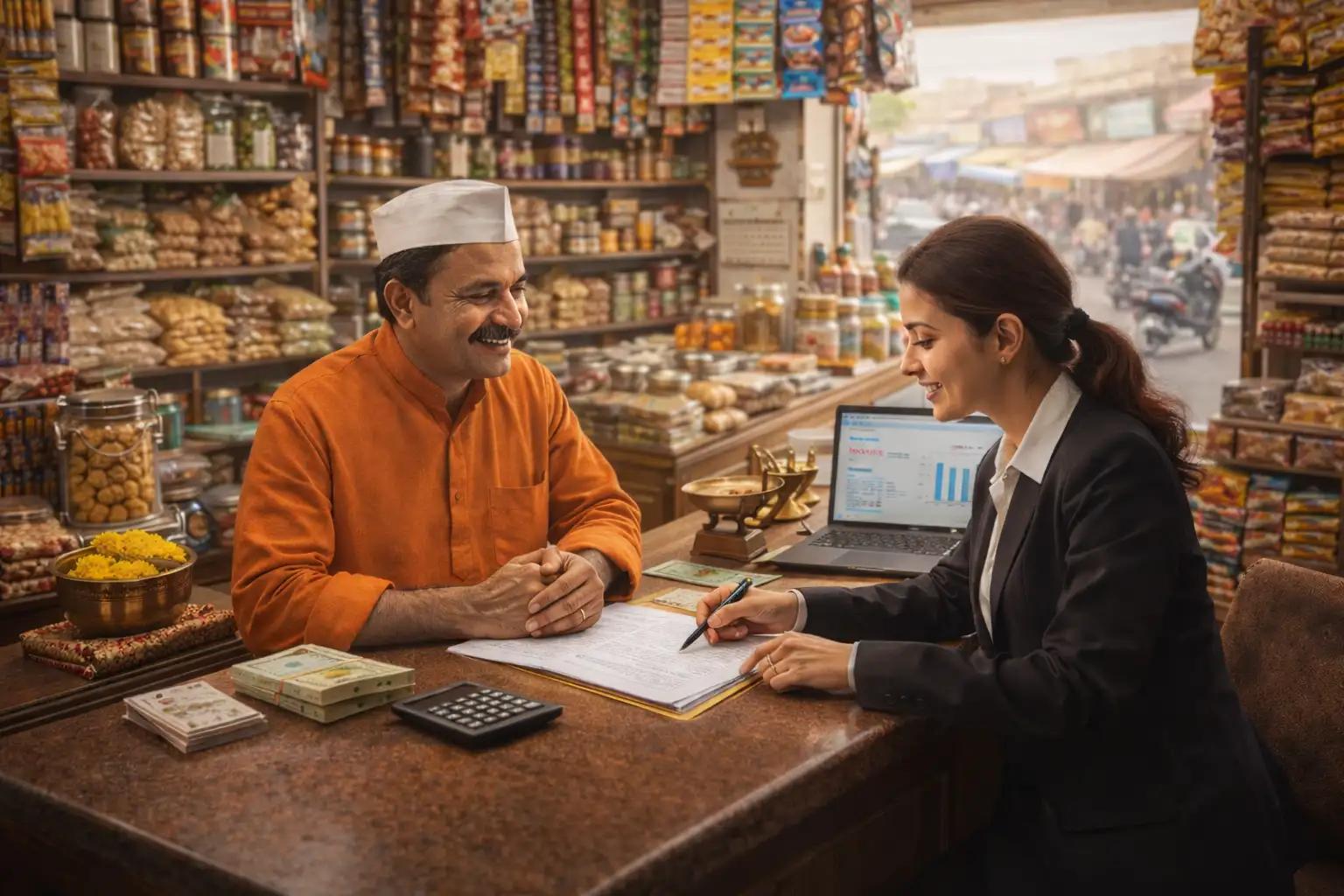
Q1. Could you start by giving us a brief overview of your professional background, particularly focusing on your expertise in the industry?
I spent 32 years actually running lending businesses — not advising from the outside. I grew a small business loan portfolio from ₹700 crore to ₹3,400 crore. I fixed collections when they were broken. I built branch networks from scratch. Now I help NBFCs and banks think through their people, strategy, and leadership challenges. Everything I offer comes from having done it myself — not from a textbook.
Q2. What structural changes are reshaping the retail and MSME lending landscape, and which business models appear best positioned to capture growth over the next five years?
Three things. Data about borrowers is finally good enough to lend to people who have never had a credit history with confidence. Banks and NBFCs are finding smarter ways to share risk rather than carry it alone. And the real growth is not in big cities anymore — it's in smaller towns where credit has barely reached. Lenders who figured this out early and built on-the-ground presence are the ones pulling ahead now.
Q3. What emerging borrower segments remain underserved despite rapid credit penetration, and what is preventing lenders from effectively reaching them?
We think credit has reached everyone. It hasn't. A truck driver trying to own his first vehicle, a craftsman in a small town, a trader who operates largely in cash — these people are still largely ignored. The problem is not a lack of technology. It is that most lenders don't know how to recover money from a borrower in a place where everything runs offline. I've dealt with this directly. You solve it with people on the ground and by understanding how a borrower's income actually flows — not just whether they paid last month.
Q4. As embedded finance and digital lending platforms gain scale, how do you see traditional banks and NBFCs redefining their competitive advantages?
Yes — but not by trying to copy them. Digital lenders are quick to approve loans. Where they struggle is what comes after: when a borrower hits trouble, when the economy slows, when collections get hard. A well-run NBFC that has been through a bad cycle knows how to handle that. That experience and those relationships are the real advantage. Trying to win a technology race against a fintech is the wrong battle.
Q5. How sustainable are current digital acquisition-led lending models, given increasing regulatory scrutiny and customer acquisition costs?
Not in its current form. Getting customers online has become expensive. The regulator is watching closely and tightening rules. The lenders who will survive a downturn are those who know their borrowers well and have built their own track record on loan repayments — not those who simply pushed out large volumes quickly. Rapid growth in lending to first-time borrowers looks great on paper. Reality shows up when times get tough.
Q6. What aspects of the lending value chain are most vulnerable to disruption from AI, automation, and alternative data-driven underwriting models?
It will make the routine parts of approving a loan faster and cheaper — and that's already happening. The bigger opportunity, which most lenders haven't touched yet, is using it to spot early signs of repayment stress and act before a loan goes bad. The danger is assuming that because a system is smart, it is also wise. Technology can speed up a decision. It cannot take responsibility for a wrong one.
Q7. If you were an investor looking at companies within the space, what critical question would you pose to their senior management?
How well are you collecting on loans you gave out in the last 18 months — and is that better or worse than before?
That single answer tells you more than any presentation ever will. I have seen firsthand what separates a lending business that grows sustainably from one that is quietly building a problem. It almost always comes down to how seriously they take getting their money back — not just how fast they gave it out.
Need an expert in this space?
Talk to an Industry Expert
Knowledge Ridge connects decision-makers with carefully vetted subject matter experts for one-on-one calls, research sprints, and advisory engagements — across 11 sectors and 163 sub-industries globally.
Comments
No comments yet. Be the first to comment!