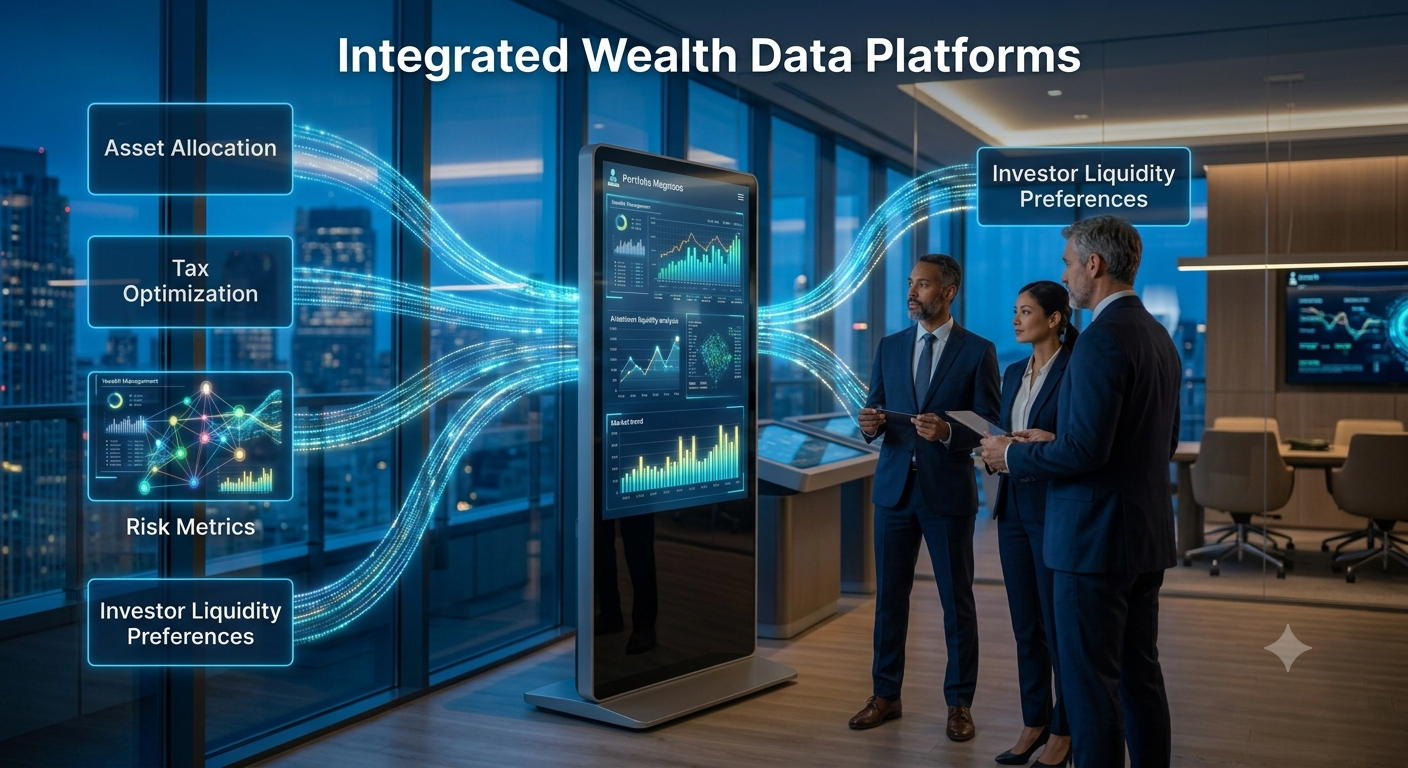
The Rise of Integrated Wealth Platforms
Q1. Could you briefly walk us through the roles where you were directly responsible for investment, lending, portfolio management, or business growth decisions, including the scale of client assets, revenues, or portfolios under your oversight?
I have worked in private banking and wealth management for the past 15 years with organizations like HDFC Bank, Axis Bank, Citibank, State Bank of India Wealth, and Centrum Wealth. In these roles, my duties went beyond relationship management to include investment allocation, credit structuring, portfolio construction, and business expansion. I have overseen lending solutions such as LAS, mortgages, and custom credit while managing client assets totaling more than ₹ 2,200 crore across mutual funds, PMS, AIFs, structured products, fixed income, and alternative investments. In addition to AUM growth, revenue quality, customer retention, portfolio performance, and long-term wealth generation were used to gauge success.
Q2. How is the balance of power shifting between product manufacturers, distributors, wealth platforms, and independent advisors, and what implications does this have for the industry's future structure?
Advice-led ecosystems are gradually replacing product-centric distribution in the sector. While distributors are becoming comprehensive wealth partners, product manufacturers are increasingly competing on performance and innovation. Although digital wealth platforms use technology to reduce friction, independent advisers still have an advantage in comprehensive financial planning, behavioral coaching, and trust. Competitive difference will eventually rely more on intellectual capital, data capabilities, and the capacity to provide individualized counsel at scale than on product access.
Q3. Which investment products do you believe are gaining relevance because of structural market changes rather than short-term performance cycles?
Products that align with long-term demographic, technical, and regulatory trends, rather than transient market momentum, are gaining structural relevance. The importance of private credit, private equity, infrastructure funds, global diversification methods, ETF-based passive investing, retirement-focused solutions, and regulated digital assets is growing. Instead of relying primarily on conventional equity and debt portfolios, investors are seeking diversification across asset classes, geographies, and performance drivers.
Q4. How are liquidity preferences among affluent investors evolving in response to economic and market uncertainties?
Optionality is becoming more important to wealthy investors than maximizing returns. Instead of making a complete commitment at once, they are using phased deployment tactics to allocate funds while maintaining larger liquidity buffers. A heightened awareness that liquidity itself is a strategic asset during times of high volatility and market disruption is reflected in the increased demand for products that offer predictable cash flows, capital preservation, and flexibility.
Q5. How do you see AI influencing investment decision-making, portfolio monitoring, and advisory models over the next few years?
Investment professionals will be supplemented by AI, not replaced. With AI detecting hazards, tax opportunities, portfolio drift, and behavioral biases in real time, portfolio monitoring will become continuous rather than periodic. The automation of routine analysis will greatly increase research output. Nonetheless, customer trust, strategic asset allocation, and judgment will always be essentially human. The best advising businesses will integrate AI-driven intelligence with seasoned advisors capable of interpreting insights within each client's specific financial context.
Q6. What opportunities are being created by the convergence of banking, investing, lending, insurance, and digital platforms?
Integrated financial ecosystems are emerging from the convergence of banking, investing, lending, insurance, and digital platforms. These ecosystems provide clients with end-to-end solutions rather than discrete products. Investments, credit, risk mitigation, estate planning, tax optimization, and cash management can now all be included in a single relationship. This increases lifetime value, client engagement, and operational effectiveness for organizations. Clients benefit from improved capital allocation, more convenience, and a better-coordinated financial plan.
Q7. If you were evaluating a wealth management firm today, which metric would you trust the least, and which operational indicator would provide a clearer picture of future performance?
The metric I would trust the least is headline AUM, because it often reflects market appreciation rather than genuine business strength. A clearer indicator is net new money, combined with client retention, share-of-wallet expansion, recurring revenue, advisor productivity, and asset persistence across market cycles. These operational measures reveal whether a firm is consistently earning client trust and generating sustainable organic growth rather than benefiting from favorable market conditions.
Need an expert in this space?
Talk to an Industry Expert
Knowledge Ridge connects decision-makers with carefully vetted subject matter experts for one-on-one calls, research sprints, and advisory engagements — across 11 sectors and 163 sub-industries globally.
Comments
No comments yet. Be the first to comment!